


Floodplain Farming
Floodplain meadows, nesting warblers, and 100+ bird species, this Wiltshire farm turns waterlogged land into a haven for nature and to produce pasture-fed beef.
BIODIVERSITY CASE STUDY
Andy Rumming and Waterhay Farm
Tell us about your farm
Waterhay Farm is located in Leigh near Cricklade in North Wiltshire. Its 70 hectares, but we have licences to make hay on a further 30 hectares of local species rich flood plain meadows, which are now an integral part of our over winter forage and bedding supply. The farm straddles the river Thames with a third of the farm flooding every winter. These floods can be brief, but more recently have been prolonged with some land underwater for several months, and peak depths edging higher.
Occasionally summer floods do also happen. The farm is pretty flat at around 80-85m above sea level. The soil is mainly a neural heavy clay, overlaying gravels in the flood plain. A small area is more alkali, and the changes in flora show where this is. The whole farm is permanent pasture and supports 90 suckler cows in 2 herds. The calves upon weaning are moved to my brothers farm 8 miles away for finishing. Both farms are part of the same business, DW Rumming & Sons, and we are PFLA accredited with our own PFLA accredited on farm butchery and retail beef business. We have one field in Higher Level Stewardship, and Entry Level Stewardship across the farm, but the monetary income from this is small.
Share with us a general description of the biodiversity on your farm
Waterhay Farm is a place of grass (often long), lots of mature hedges and a lot of in hedgerow trees. Elm suckers are our commonest tree, closely followed by Ash. Along the river and on the flood plain we have lots of crack willow, including 20 plus gnarled "veteran" willows which we pollard on rotation for our biomass boiler (which heats our houses).
The willows are fascinating and are home to nesting tree creepers, and even other trees within their crowns. The riverbanks are all now fenced, so we have a wild riparian strip both sides of the river which includes reeds, sallow, and watermint which provides habitat for Reed and Cettis Warblers, egrets and waders, plus teal in the winter. This dense cover is also used by otters and stoats and water voles.
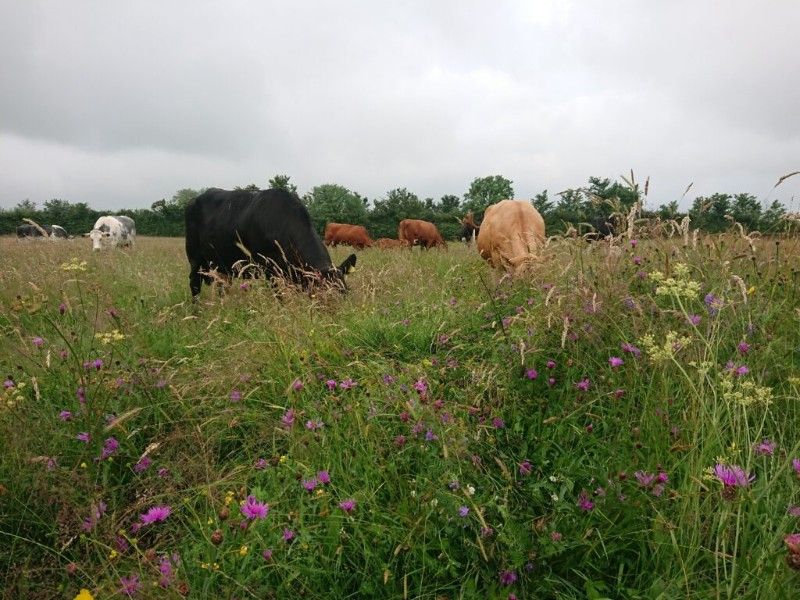
The land on the flood plain is made up of fields which are rotationally grazed and one large traditional hay meadow. There is some overlap of species but the traditional hay meadow is a good example of MG4 grassland containing a wide range of species including Snakehead Fritillaries, Peppered Saxifrage, Great Burnett and yellow rattle. We cut this for hay and it's an important part of the winter diet.
The winter floods can be extensive and provide a large wetland area for over wintering wader and ducks. This influx has helped the farm record over 100 species of bird in 4 years. The non flood plain area is split between areas cut for silage and areas grazed. All of these fields have been improved in the past, but they are becoming more diverse thanks to rotational grazing, no inputs and species rich hay fed in the field. The dominant grass here is meadow foxtail which is supposedly "unproductive" but it works for us.
Our fungal diversity on what is productive farm is something I am very excited about, particularly the finds on the silage fields. We have a wide range of grassland species including the spring fruiting (and very tasty) St George's mushroom and tricky to find Meadow Puffball. Being close to the river we have a very large population of damselflies, and in May they can be seen in the thousands and spread out into the fields.
What do you do to encourage this biodiversity?
Mob grazing - Over the last 5 years we have moved away from set stocking fields to rotational/mob grazing. This means longer grass in general and a range of grass heights and maturity within any one field. This diversity in vegetation structure, and lack of disturbance has been great for ground nesting birds, insect eating migratory birds like yellow wagtails, and mamals such as hares.
Stopped using chemical worming and blanket fly control - this has meant that we now have really good dung beetle diversity.
Stopped full reseeding – For fungal diversity ploughing and reseeding are highly detrimental and we are no longer doing this
Moving hay from a minor to a major forage source
Mink control – to protect water voles
Nest boxes for key species like swifts. Later this year we will be erecting an Osprey platform and a Sand Martin tower
How is it connected across the farm and beyond?
To the north we are adjacent to a large complex of reedbeeds and ex gravel pits, now managed for wildlife by the Cotswold Lakes Trust, a mile to the south is another nature reserve where an airfield is being transformed into a huge hay meadow by Wiltshire Wildlife Trust.
Being inbetween these two sites we are able to provide a bridge for wildlife and see a range of specialist birds which are not normally associated with farms like ours, such as European Cranes, Marsh Harrier, Cattle Egrets and Oystercatchers. We also make an effort to have good relationships with these neighbouring organisations, talk to and connect with the people on the ground, and occasionally do contract work for them.
What are the benefits to the farm?
Having really rich biodiversity makes the farm a really interesting and fulfilling place to be, live, work and explore. There is always something new to find, study and research, even when you were not looking for it. Also the biodiversity underpins our PFLA accreditation as so our beef sales.
Our beef customers want to know what wildlife we have, what we are doing to improve it and they want to come and see it.
They want beef from a farm that is not giving token gestures, but making biodiversity a key farming objective. We have recently set up a small off grid glamping enterprise, and getting back to nature with real wildlife encounters are what our customers want (and expect). Our farming system means we can deliver this. In 2020 retail income from direct sales overtook non retail income, with an associated increase in profitability – so for us the environmental approach pays as well as being fulfilling personally.
How do you monitor it?
Birds – I carry out a monthly bird survey and have 5 years of data. We also have an independent bird survey (Redlist Revival) in April and June walking fixed transects.
Trees – I have carried out a hedge by hedge tree survey to look at diversity and age
Plants – I am a Flood Plain Meadows Ambassador and work with the Flood Plain Meadows Partnership to carry out botany surveying in our hay meadow. At North Meadow SSSI where we make hay we work closely with Natural England and Cricklade Court Leat who do highly detailed botany assessments.
We run a moth trap as a family and compare records with other local moth enthusiasts. Individual species – we have yearly visit from the Barn Owl Conservation Trust to record our barn owl productivity, and have had PhD studies on our bats and dung beetles
Mammals – we work with the Cotswold Lakes Trust to monitor and control mink and assess water vole numbers
Are there any benefits to the farm that are directly attributable to the Pasture for Life approach?
In April 2021 we had a spell of continuously cold weather with no grass regrowth and limited insect activity. We had our cows out mob grazing, and the areas around the cattle appeared to be the only areas with insect activity – this meant we had every passing migrant and lingering over-wintering bird in the area, concentrated in the small area with our cows.
100's of Meadow Pipits, Yellow Wagtails, Redstarts, Whinchats, Wheatears, even a Pied Flycatcher – it was a bird watchers paradise.
This only happed due to the cows, lack of insecticides used, a grazing system which mean they could be there and thrive, and applied knowledge gleaned from 100s of other PFLA members over the years. For us cows are the engine house for maintaining and kick start biodiversity at Waterhay and North Meadow.
What lessons have you learnt and would like to share with others?
Whenever a researcher or PHd student wants to survey a farm, make contact and invite them to come, but do ask them to share with you the full data for your farm and the final report for the work they are undertaking. Chase them up if necessary.
Reach out to local wildlife groups, keen individuals, neighbouring land owners. Do this in person, through Facebook, Twitter or email, invite them to visit
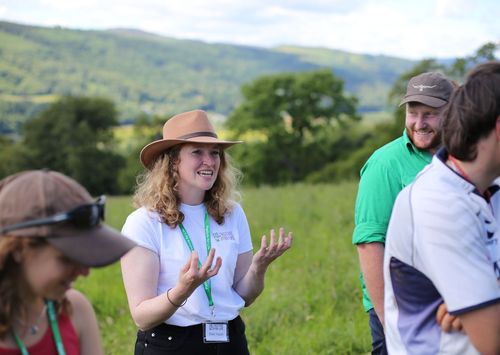
When any of the above visit, ask to follow them round, ask questions, take notes – it's a lesson on your own farm!
Build a contact list of experts who can help you identify, monitor and find out about your biodiversity and nurture them.
Subscribe to British Wildlife magazine – this publication is a constant source of inspiration, information and big picture context.