


Conservation Grazing in Action
Managing over 650 hectares of environmentally significant land, Bill and Cath Grayson use grazing livestock to enhance biodiversity across meadows, marshes, wood pastures and fens in north west England
BIODIVERSITY CASE STUDY
Morecambe Bay Conservation Company
Tell us about your farm – location, size, altitude, climate, soils, enterprises, organic/PfL/other status?
My wife, Cath and I farm about 650 ha of different semi-natural habitats, which include unimproved rough grazing (mostly on limestone), meadow, heath, salt marsh, fen, reed bed, wood pasture and scrub, all of them located within the area adjoining Morecambe Bay in north west England which is North Lancashire and South Cumbria. We're known as the Morecambe Bay Conservation Grazing Company or MBCGC.
Our system, which has been continuously evolving over the last 30 years, is a rather unconventional one, in that it consists of a suite of separately leased land parcels, none of which amounts to a viable farm unit in their own right. However, in combination, they provide a basis for a successful Organic- and Pasture for Life-certified livestock operation, based on Red Poll cattle and Easycare sheep.
The entire land holding, in its current form, extends from the edge of the Bay up to 150m on the surrounding limestone hills and, although most of the land would be deemed rough grazing, the system has proved itself capable of breeding and growing healthy, well finished cattle and sheep, albeit not in the numbers or the speed that are typical of more favourably situated farms.
The climate is typically mild and wet, with more than 1000 mm of rainfall falling in most years on most of the sites we graze. Summers are much less predictable and over the last 10 years have been marked by longer bouts of hot dry weather, usually in the first half of the season when the impact on plant growth can be most damaging.
The wide range of vegetation types found around Morecambe Bay is associated with the wide variations in soil type, which includes everything from deep peats to shallow, stony soils on limestone outcrops, the two sometimes occurring just a few meters apart.
"It is surprising, looking at the lush scenery we see here today, to think that ice had stripped much of the soil from this glaciated landscape only some ten thousand years ago. This dramatic recovery of the landscapes demonstrates the power of Nature’s regenerative potential long before our industrialised system of land-use began to dominate our countryside."
Share with us a general description of the biodiversity on your farm – essentially above ground, but reference to below ground if relevant, both flora and fauna.
The wide variety of different sites and habitats included within our farming system makes it difficult to succinctly describe the full extent of its biodiversity interest.
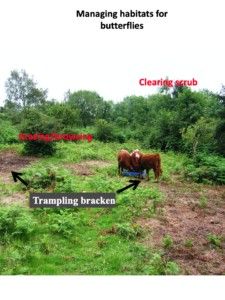
All of the sites within our system are managed primarily for their nature conservation interest, with most having been formally designated because of their importance for wildlife, either as National Nature Reserve (NNR); Site of Special Scientific Interest (SSSI) or Local Nature Reserve (LNR). Even the sites that don’t enjoy any official designation are still being managed for their wildlife value under one of DEFRA’s agri-environment schemes.
Grazing livestock play a crucial role in the management of all of these sites, in delivering the specific conservation objectives for each of the different types of habitat, hence the term ‘conservation grazing’.
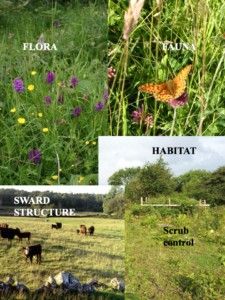
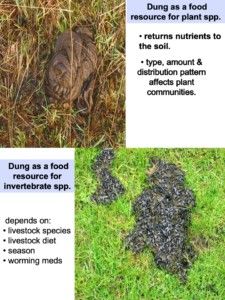
"The animals’ grazing and browsing activities modify the structure and species composition of the vegetation, their trampling breaks up dense stands of resistant plant material, and creates patches of bare ground where plant seeds can germinate and insects can lay eggs or absorb heat from the sun, whilst the dung they produce provides food for huge numbers of different invertebrates, so that it becomes an essential source of nutrients for future plant growth."
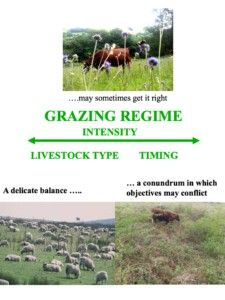
Conservation grazing involves constantly monitoring of all these different activities so that the numbers and types of grazing animals and the timing and duration of the grazing season can be adjusted to achieve the best outcomes for Nature.
What do you do to encourage this biodiversity and what are the lessons you've learned and would like to share?
Back in the early 1990s when we started out, many of the reserves that our cattle now graze had long been abandoned by farmers because they could not sustain sufficient levels of production demanded by an efficient farm business.
Despite the best efforts of the conservation bodies that by now were managing them as nature reserves, they were gradually losing much of their original diversity as the grasslands became increasingly dominated by just a few of the coarser grass species, the rank growth of which smothered the more delicate limestone flowers and herbs.
These are the same flowers that give limestone grassland its unique ecological value, providing important food sources for a wide range of insects whilst creating a fantastic display of beautiful colours and textures – something that the poet John Clare referred to as his ‘midsummer cushion’.
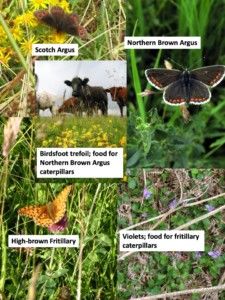
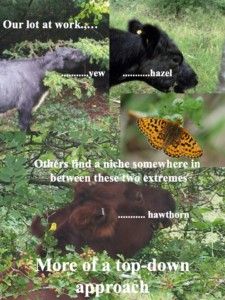
Amongst the attractive limestone flowers that suffered this decline were species like dog violet, cowslip and rock rose, all of which provide an essential food supply for certain butterflies like the high brown and pearl bordered fritillaries, the duke of burgandy and the northern brown argus, respectively. All of these butterflies have become rare throughout the UK over recent decades, due to loss of habitat, usually driven by changes in farming systems.
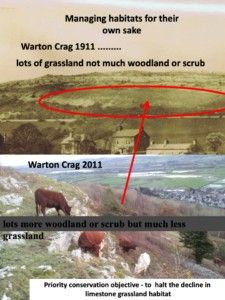
"By the time we had begun to reintroduce livestock grazing to these habitats, many of them were already experiencing a rapid expansion of woodland and scrub."
This was due to natural succession, the process by which these woody species are able to colonize open ground by dispersal of seeds and spread of root-suckers, once they had been released from the constraining impact of browsing animals.
All these trees and shrubs are native species and most of them are very important ecologically, supporting their own assemblages of smaller plants and animals. Some, like the juniper, are important species, requiring conservation in their own right whilst others like oak, buckthorn and blackthorn are important food sources for particular butterflies like the purple hairstreak, brimstone and brown hairstreak respectively, all species that are regularly recorded on sites that our cattle graze.
"The loss of open habitat appears now to have been halted since the grazing has been restored, suggesting that the browsing impact of the livestock has helped to establish a new and more stable dynamic between the competing processes."
Cattle are especially important in this respect, having the physical strength and bulk to break up denser areas of scrub to create the smaller gaps and glades that many of these shelter-loving butterflies need in order to thrive.
The complex mixture of shaded and open habitats that develops under this form of grazing is usually termed by ecologists as ‘wood pasture’.
These days, wood pasture is generally regarded as the most likely type of landscape to have predominated in Britain before farming got underway. And because its mosaic nature provides an abundance of ‘edge habitat’ upon which many of our most specialized and sensitive native species depend, it is usually highly valued by conservationists.
"This ability of native trees and shrubs to naturally regenerate and spread to new areas is an important consideration because of the world’s urgent need to mitigate climate change by capturing and storing excess atmospheric carbon."
"Trees and other types of vegetation are still our best hope for achieving this – and what’s more they do it for free."
So it is interesting to note that although we started our conservation grazing operation by using cattle to check the unwanted spread of woody plants on sites where succession was a problem, it evolved to one that could also facilitate their expansion by natural regeneration in situations where this is appropriate. Such circumstances occur on the Ingleborough National Nature Reserve (NNR), in the heart of the Yorkshire Dales, where decades of continual sheep grazing had eliminated much of the tree and shrub cover.
In 2003, English Nature (now Natural England) who manage most of England’s NNRs had decided that the site’s conservation value could be enhanced if the landscape were to begin acquiring more trees and shrubs. They realised that for this to happen, cattle would have to be brought in to replace the sheep. Which is where we first became involved with the site, taking on this new challenge when none of the local farmers could be persuaded to take it up.
And for us it was a genuine challenge as in many ways the situation was the direct opposite of what we had been dealing with prior to that down on the fringes of Morecambe Bay.
"So it was really exciting to see within the first year or two of the cattle taking over the land beginning to respond to the new grazing regime, with flushes of the pale pink birdseye primrose and bursts of bright yellow rock rose appearing across large swathes of the open expanses of this upland rough pasture."
But as well as this impressive display of flowers in full bloom , we soon noted how, wherever mature trees and shrubs were still present, we began seeing young saplings of hazel, hawthorn and ash emerging from the sward. These were obviously the progeny of the nearby trees, having germinated in gaps created in the sward by the cattle’s hoofprints. And whilst many of these new recruits do appear to get browsed off by the cattle, a proportion are managing to escape this fate long enough to establish themselves as permanent constituents of the community. Hopefully, this will ensure a new and more widespread generation of trees will be ready to take over from their parents as the latter begin to die off.
"It was really exciting to see within the first year or two of the cattle taking over the land beginning to respond to the new grazing regime, with flushes of the pale pink birdseye primrose and bursts of bright yellow rock rose appearing across large swathes of the open expanses of this upland rough pasture."
[REMOVE LINK]The cattle grazing on Ingleborough has worked so well over the last 18 years that Natural England have just bought a large area of new land adjoining the reserve with the intention of expanding this form of management. Their aim is to expand the cattle herd, plant clumps of trees to provide a suitable seed-source, and then wait for Nature to deliver her own version of upland wood pasture. Perhaps, given time, this might come to resemble the kind of landscape that would have existed here before the first farmers arrived and began clearing it of trees.
Our efforts to restore biodiversity are not just confined to grazing of pastures; we also manage a suite of hay meadows, all of which have been or are being restored to a much more species-rich state than when we took them on. In all, there are about 20 ha of what had been either improved or semi-improved grassland back in the 1980s, some of it having been ploughed and re-seeded with a commercial ryegrass-based mix. One had even been a market garden for many years, receiving such high levels of inputs, that even today it still has the astonishingly high phosphate index of 5. Even more amazing then that this field is now our most stunning example of a wild flower meadow, with wall-to wall orchids and a host of the other colourful species that are typical of long-established hay meadows. The dozen or so meadows that we manage are scattered across the Arnside and Silverdale AONB, an area that despite its plethora of limestone grasslands had virtually no examples of species-rich hay meadow when we started farming here. It therefore came as no surprise to us to learn that 95% of Britain’s traditional flower-rich meadows have been lost since the 1950s.
A conservation grazing system, like ours might not be expected to have much need of meadows or for the hay crop that they produce, since most of the animals are outside grazing these different habitats throughout the whole of the year. However there are times every winter when we need to provide additional feed some of the animals, either because the quantity or quality of the grazing has declined to a
point that threatens to compromise their welfare or because prolonged periods of snow or flooding have made the grazing inaccessible. Our ongoing need for winter fodder is best met by making it ourselves, so that we have more control of its quality and provenance. We especially value fodder with a high content of herbs, because it appears to be what the animals themselves prefer and to perform best on. All of which emphasises the splendid synergy that exists between the needs of the livestock and the benefits for nature conservation.
The method we have evolved for restoring plant diversity is straightforward, low-tech and cheap. It involves keeping a small group of cattle on the target meadow and feeding them with hay taken from another more species-rich donor meadow. Seeds of the required-mix of plant species are brought in in the hay bales which are scattered loose on different sections of the field each day. Most of the seeds fall out when the cattle are eating the hay and are trodden into the soil surface where some will germinate the following spring.
Hay rattle, is a keystone species in this restoration process, because once established it parasitizes and weakens the more dominant grass species, a result that many would think fundamentally contradicts the basic farming ethic. Why would any self-respecting farmer choose to undermine their own productivity like this? And certainly we do expect to see the number of bales decline quite significantly in the first two to three years following establishment of the hay rattle. Soon, however, other herb species, freed from the smothering effects of the coarse grasses, thanks to the arrival of the hay rattle, are able to establish and spread. And usually, one of the first herbs to take advantage of the new dynamic is red clover, a legume that, by fixing nitrogen from the air is able to boost plant growth, rebalancing productivity of the sward by compensating for the weakening effect of the hay rattle.
A new equilibrium is soon established in which these opposing effects of the clover and the rattle usually reach a balance at something aapproaching 80% of the original yield. And whilst the loss of a fifth of the hay crop is not insignificant we still regard the change as a positive one overall because the feed-quality of the herb-rich material is superior. Laboratory analyses have confirmed that the herb component of a sample of hay is more nutritious in terms of its energy and protein supply, and its mineral and trace element content compared with the grass portion. We believe that the high proportion and diversity of herbs in their diet explains why our cattle are able to thrive as well as they do on what most farmers would consider to be a less than adequate diet.
"But, although, we have to accept that not everyone will be convinced about all this ‘biodiversification’ in terms of its benefits for animal husbandry, the advantages for nature conservation are unquestionable."
Once the hay rattle and red clover are well established we are able to leave Nature herself to work out how the rest of the restoration process proceeds, allowing new species to arrive and take hold as they ‘want’ to, rather than best guessing her choices by introducing species that we think ‘ought’ to be there. This necessarily means that things can take longer than they would if we just planted a ready-made herb-rich seed mix, but we feel that the end result of letting Nature take her own course feels more valid and is more likely to be sustainable.
We began this process back in 1993 with a half dozen ‘improved’ meadows that, having received regular dressings of NPK fertilizer in the past, by then contained few flower species. apart from a single field that held a small clump of hay rattle tucked away in one of its corners. From this not-very-promising start we have managed to restore a rich mix of herbs and flowers to more than twenty meadows using a method of our own devising but which is similar to what is now might be termed ‘bale-grazing’; somehow, it seems our home-made, rather ad-hoc system developed into a recognized technique for increasing plant diversity in grass swards.
After a few years, even the untrained eye can see that these meadows of ours, with their colourful mix of wild flowers, which might include species such as knapweed, ox-eye daisy, meadow vetchling, betony or tufted vetch look utterly different to the uniformly green silage fields that are typical of the more intensive livestock farms that these days occupy most of the more productive land surrounding Morecambe Bay.
A few of our meadows have even been colonized by orchids, a particularly significant group of indicator plants denoting high-nature value sites, since they require the presence of specific types of symbiotic mychorrizal fungi in order to colonise a site. These mycorrhizae quickly disappear when modern agro-chemicals begin to be used, making such situations untenable for orchids.
"So our excitement might be imagined when, in 2011, one of our most long-standing ‘restoration’ meadows produced a single spike of northern marsh orchid and how that excitement has increased throughout the ensuing ten years as we watched the population of orchids increase."
It now numbers more than two hundred plants that have spread their deep pink spikes of flowers throughout the whole two acre field, making a glorious sight when they bloom in June each year, a sight that seems to become increasingly splendid with each passing year.
"We have to accept that not everyone will be convinced about all this ‘biodiversification’ in terms of its benefits for animal husbandry, the advantages for nature conservation are unquestionable."
[REMOVE LINK]How it is connected across the farm and beyond?
Because we don’t farm a single enclosed holding, establishing direct connectivity between the different habitats that we manage is much harder to achieve than it would be if all these sites were closer together. Connections linking them do exist however, but these are more conceptual than actual and emerge from having to integrate the different grazing needs of the various sites into one coherent grazing plan that ensures enough suitable animals will be available each year to deliver the grazing for each individual site at the prescribed time.
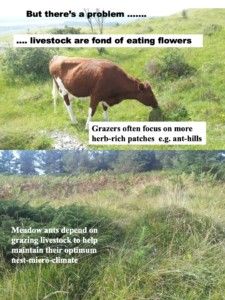
Each site may contain a range of different habitats which the livestock will be able to move through as they seek out the best areas to obtain feed, shelter and rest. Seeds can easily get moved between these different areas, carried on the feet or in the coats of the grazing animals. Such freedom of movement can obviously make it easier for plants to colonize new areas, wherever there are suitable conditions for their establishment. This provides a convenient and cheap means of enhancing the species richness or vegetation structure of the different habitats.
We regularly see sapling trees and shrubs germinating in the pastures we graze, some of which will eventually go on to establish a new generation of young trees and shrubs, The seed from nearby patches of woodland or scrub is able to germinate in the hoof marks left by the cattle as they move amongst these different habitats, alternatively grazing and browsing. Such natural processes seem likely to have important benefits in promoting expansion of tree cover by natural regeneration, something that is of particular relevance to many of our upland landscapes and which is described in more detail below.
It has already been explained how we are making more deliberate connections between different sites as specific pre-planned measures for restoring species-rich hay meadows. So it is encouraging to see similar tactics being adopted by other local stakeholders, wanting to expand the benefits of species-rich grasslands into the wider landscape of the Arnside and Silverdale AONB. We are helping staff from the AONB who, having secured funding from Plantlife as part of their Meadow Makers scheme are using one of our restored meadows as a donor site from which to harvest a suitable seed mix for restoring flower-rich hay meadows on neighbouring holdings. This donor meadow of ours had itself received the same restoration treatment described previously. The fact that it is now, just ten years later, considered a good site from which to harvest a suitably representative seed mix for the area shows how well it has worked, having initially consisted of a rather species-poor sward, dominated mainly by grasses and containing few flowers or herbs
What are the benefits to the farm?
It’s fairly obvious that our ‘farm’ operates in quite a different way to most other agricultural holdings, but the fact that it has survived for nearly thirty years seems to indicate that our business model is a viable one. It pre-dates the introduction of Single Farm Payment, but coincided with the launch of the first Countryside Stewardship Scheme back in 1992. This was when farmers were first able to be paid to manage land in ways that benefited wildlife and landscapes, a step that paved the way for conservation graziers to be rewarded for using their animals to deliver the management objectives set out in these kind of agreements.
We have been able to benefit both directly and indirectly from these schemes. The direct benefits come from being able to enter some of the land we rent into a stewardship agreement in our own name so that the annual payments are made straight to us. However, the larger part of the system is let to us on terms that prevent us applying for Stewardship directly. In such cases, it is the landlord, usually one of the local conservation organisations like the RSPB, Wildlife Trust, Woodland Trust or Butterfly Conservation, who will enter the scheme and receive the payments in their own name. However we are still able to benefit from such arrangements because fulfilling the terms of these agreements inevitably requires that the site be grazed, and in a particular way that is expected to deliver the scheme’s environmental objectives. This however, is something that these organisations, without their own livestock, are unable to do - which is why they depend on the services of a conservation grazier like us.
In return for explicitly committing to graze the livestock in accordance with whatever grazing regime is required under the terms of the Stewardship agreement, we are only expected to pay a nominal rent for the use of the land. This is because the poorer forage quality, the additional physical challenges posed by the rougher terrain and the sometimes inconvenient conservation-led clauses associated with these situations make them less viable in commercial farming terms. But at the same time we are allowed to claim the Basic Payment for the site, an arrangement that makes for an equitable arrangement, based on dividing up the various area payments between ourselves claiming payment for the farming element and the site managers getting the conservation payments. This creates a stable relationship in which each party depends on the other one sticking to their side of the agreement so that both are eligible to receive their respective payments each year.
Of course, we are only too aware that this convenient dovetailing of the current area-based payments is about to be phased out, and much is still not known about how the new Environmental Land Management schemes will restructure the different layers of support available to farmers and land owners. However we are quietly confident that the level of trust and mutual interdependence that has been fostered under the current arrangements will ensure that our conservation grazing activities will continue to be properly rewarded.
Although this specific remit to deliver biodiversity benefits has helped to secure the viability of our particular business, conservation grazing may not suit everyone.
"Many farmers’ economic fortunes depend mainly on market forces , a focus that forces them to prioritize improving yield and efficiency of production."
Such farmers would probably find it harder to justify taking on these ‘unimproved’ pastures, full of wild plants of unknown feed value and safety. They may be concerned about reductions to yield, slower livestock growth rates which could run the risk of missing financial targets critical to their business.
"However we firmly believe that what these wild herbs may lack in terms of quantity of yield is more than compensated for in terms of their better nutritional quality."
This is since we became aware of how much our cattle prefer hay that is rich in herbs and wild flowers. We noted their eagerness to get the darker colour material that indicates that haylage contains a lot of herb. Many herbs take on a dark colour, almost black, when cured for haylage – a change that the cows appear to have noted too.
Besides being more palatable, we have found wild herbs to be more nutritious. Separate samples of herb and grass sorted from within the same bale and sent for testing in the lab have shown that the herb component is higher in protein, energy, minerals and trace elements than the grasses accompanying them. This is likely to be particularly important for farmers like us, who because of agri-environment prescriptions cannot cut their meadows for hay until later in the season, by which time feed value of the grasses is in steep decline. Having a higher herb content ensures that even hay made late in the season can still provide a good source of nutrition on which to rear young stock through the winter.
"Many farmers’ economic fortunes depend mainly on market forces , a focus that forces them to prioritize improving yield and efficiency of production."
(Remove Link)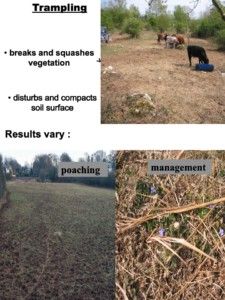
How do you monitor it?
Monitoring biodiversity is obviously important for the successful management of nature reserves. It is only by making careful assessments of the condition of the various habitats that we graze, that we can make the necessary adjustments to their management. And whilst this is an activity that underpins all successful grazing management, it is particularly important for conservation grazing, where the objectives are often set according to what happens to individual plant and animal species.
As in all forms of animal agriculture, livestock on nature reserves need to be checked frequently to ensure their safety and welfare, a requirement that is even more important in situations where the terrain, pasture quality and visitor numbers are likely to present a significant challenge for them. This need for frequent and regular inspections to ensure animal welfare allows plenty of opportunity for monitoring ongoing changes to the flora and fauna.
Usually this is associated with a specific management objective concerning either the condition of one or more of its habitats or the abundance and distribution of any of its plants, insects or birds. The livestock produce visible impacts on the vegetation which can be routinely monitored visually, noting the degree to which certain plants are being eaten relative to others and how this varies over time.
"Observing these changes is an ongoing process that soon becomes automatic, supplying valuable information about how the different types of livestock interact with the various habitats, information that helps us to match the conservation requirements of the site with the most suitable grazing animals. Much of this information is recorded in photos so it can be filed for future reference."
More specific types of monitoring are often employed on sites where the conservation management aims to enhance populations of birds, butterflies or particular plants. Mostly, these are carried out by staff or volunteers from the conservation body responsible for that site, although we too have helped by carrying out butterfly transects on a number of sites over the years.
We also have also been carrying out regular botanical surveys to monitor the changes in our hay meadows as they become more species rich in response to our restorative management. We use quadrats to estimate the distribution and abundance of the various grasses and herbs in each field, which is still the most reliable way to monitor their transition to a more species-rich state.
We also want to understand how these above-ground changes relate to what is happening beneath it and have therefore submitted numerous soil samples for laboratory analysis over the last 10 years. These have helped us build a much clearer picture of how the soils differ across our various fields and, in so doing, establish a baseline against which to assess future changes in pH, soil carbon, and nutrient status.
We are hoping this monitoring effort will help the business to benefit from the new Environmental Land Management scheme proposals that are currently being piloted by DEFRA.
"We have also undertaken initial assessments of our carbon-footprint and public goods delivery, the results of which we will provide a benchmark against which to measure future progress, something that should help our efforts to build the case for agroecological livestock production and conservation grazing."
"We have also undertaken initial assessments of our carbon-footprint and public goods delivery, the results of which we will provide a benchmark against which to measure future progress, something that should help our efforts to build the case for agroecological livestock production and conservation grazing."
(Remove Link)What lessons have you learnt and would like to share with others?
When we first began our conservation grazing journey, we were motivated mainly by a desire to enhance wildlife and natural habitats, an aspiration that we have been extremely fortunate to pursue for the last 30-plus years.
"However, as time has passed we have come to realise that Nature will never be able to truly flourish if it is restricted to the narrow confines of designated areas and reserves, whilst continuing to be undermined throughout the remainder of the countryside."
The startling fact that the drastic declines in insect abundance, that have since been referred to as ‘insectageddon’, were first recorded on nature reserves, clearly emphasises the starkness of this reality; these are the very places where biodiversity ought to still be able to thrive
"This should serve as a wake up call for conservationists; instead of focussing all our hopes and efforts for nature recovery on protecting the few special high nature-value areas and habitats that are left, we should be extending the area of concern more widely."
And the best place to start building a stronger conservation ethic would be within the food and farming system, itself; our very own life-support system and the one that is most reliant on Nature playing her full part.
"This, we feel, is the most reliable basis for delivering the ‘One health’ agenda: healthy soil, healthy food, healthy people, healthy planet."
Restoring nature-friendly approaches within the wider farming landscape is important for conserving those specialist plants and animals that have lost out as traditional farming methods have been replaced by modern intensive systems.
But moving towards a larger-scale adoption of agroecological methods is needed to halt the decline of all forms of wildlife low-input extensive species and habitats that have adapted to thrive in such a setting but also for providing the world’s people with the healthiest supply of food, free of chemical residues and without compromising future generations.
The loss of insects from the very areas that are being specifically managed to conserve wildlife shows that a land ‘sparing’ approach is unlikely to fully protect Nature; intensive chemical-based farming within the surrounding landscapes has adverse impacts within such reserves.
So whilst we have always avoided all forms of chemical inputs when managing these high-nature value sites, we didn’t realise at the outset the essential importance of wholesale agro-ecological transformation for our wildlife to be able to survive. We now see that the need for such a change has become increasingly urgent as the world begins to confront the co-emergencies of climate change and ecological collapse.
"Although we have been farming organically for 30 years, it is only within the last ten that we have come to realise the contradictions inherent in feeding grains to ruminants."
Whilst this obviously clashes with the basic agroecological principle that grazing livestock should be fed their natural herbage diet, it also represents an enormous waste of resources, when up to a third of all the world’s cereal crops are fed to animals rather than supplying human food needs directly.
Realising this simple fact is what drove us to become Pasture for Life-certified, a commitment to using only pasture or pasture-based forage to feed our cattle and sheep.
Extra certification of course represents an additional cost but one that we feel is justified given how well Pasture for Life accreditation dovetails with our existing organic status.
Having started this journey investing all our efforts and focus in management of specific nature conservation sites, we have come to realise the crucial need for a wider promotion of a more holistic systems-based agroecological approach that would be better able to conserve biodiversity across the whole farmed landscape.
And whilst we feel that it is important that farmers everywhere should respond to this call, we understand only too well from direct experience why current economic and political pressures are making this difficult.
"So perhaps the best advice we could offer to other farmers would be to urge them to make time to carefully consider how they might adapt their business ethos and farming practices to take full advantage of the new ‘public money for public goods’ system of farm support."
It is absolutely clear that the majority of small and medium sized farms will struggle to remain viable once the current Basic Payment has been removed.
Many such businesses will face a stark choice of whether to adapt their farming methods to benefit from the new environmentally-friendly support system or go all-out for maximum production. There will be no shortage of voices from a range of vested interests within the UK’s food system stakeholders urging them to boost productivity by increasing their use of purchased inputs.
However, such a strategy, is unlikely to succeed because the prices for most types of farm produce have declined in real terms, relative to the cost of the fertilizers, seeds, chemicals and feed that provide the means for cranking up output.
This means that a farm’s overall profitability begins to decline as purchases of these externally sourced inputs increase, a situation that is described and explained in a report, appropriately entitled ‘Less is More’.
"Faced with the difficult choice about whether to opt for a productionist or an environmental agenda, our hope would be that before deciding which way to go, farmers will be able to invest enough time to assess their business prospects in a similarly critical way."
Hopefully they might then realise that their farming profitability will, in fact, best be served by reducing inputs to levels that are commensurate with the carrying capacity of their land - or as it is termed in the report: Maximum Sustainable Output (MSO).
"Adopting the ‘Less is More’ approach should also have the additional advantage of boosting each farm’s prospects for securing the best level of support from the new post-BREXIT farm payment schemes, which in all four of the home nations, seem to be broadly aligning themselves with public goods delivery."
This should provide a powerful win:win message to help motivate both farmers and conservationists, to collaborate in paving the way for an exciting transformation of the UK’s food and farming system.
"If sufficient numbers of farmers were to adopt these principles we could begin the move towards a ‘One Health’ food system consisting of healthy soil, healthy plants, healthy animals and healthy people, one that was underpinned by natural processes rather than being undermined by man-made chemical intervention."
A food system model recently devised by IDDRI on behalf of the FFCC has already demonstrated how such a nature-based approach could become a reality.
It shows how applying tried and tested agroecological principles to current farming practice, combined with a more strategic approach to land use and a switch to healthier diets for people could restore nature, cut greenhouse gas emissions, cease pollution and produce healthier, better balanced supplies of indigenous food in quantities sufficient for our needs.
"This model as well as providing a blue-print for transforming our own food system also serves as a call for action, not just for farmers but to the whole of society, a society that is having to confront the combined existential threats of climate change and biodiversity loss."
"Let’s wish ourselves good luck."