

40 Years of Careful Land Management
From conventional sheep farming to biodiversity-rich pasture, and long-term environmental stewardship.
BIODIVERSITY CASE STUDY
Fidelity Weston and Romshed Farm
Tell us about your farm, its location, size, altitude, climate, soils and enterprises?
Romshed Farm straddles the heavy weald clay and drier Greensand Ridge, just outside Sevenoaks in Kent.
We own 200 acres of land and seasonally graze in a further 50 acres or so in the immediate area. We moved here in 1984, farmed conventionally with 450 breeding ewes, and then, in 2000 we converted to organic with the Soil Association, reduced our sheepflock to around 150 Lleyn ewes, bought in Traditional Hereford cattle and we now have a suckler herd of 23 cows and keep the young finishing them when they are around 30 months old, so have around 60-70 cattle at any one time. Over the years we have run pigs and poultry.
We have always placed biodiversity and conservation at the heart of our farming.
"Over the 37 years that we have been here it is interesting to reflect on what this has meant to us at different times and how our approach has changed, such that it feels like a journey that is never finished."
Give us a general description of the biodiversity on your farm.
We live in a beautiful part of the UK, it is heavily wooded and looking out across The Weald from the top of the Greensand Ridge all you can really see is mature trees and woodland, yet we are in heavily populated commuter belt with much conventional livestock and cereal farming going on.
The farm is typical of this particular corner of west Kent – small well hedged fields, heavy clay or poor greensand soils. We have all the typical birds, moths, butterflies, insects, birds, small mammals and fungi associated with this landscape and over the years we have focused on increasing it in every way but particularly on the diversity of our pastures.
"In this wooded landscape it is the pastures that need to be encouraged more than anything – semi natural grassland has declined by 97% in the last 50 years with the associated decline of all the species that rely on it."
I like to think that under our stewardship of the farm that we have started to reverse this decline at Romshed and this process continues.
"In this wooded landscape it is the pastures that need to be encouraged more than anything – semi natural grassland has declined by 97% in the last 50 years with the associated decline of all the species that rely on it."
[REMOVE LINK]What you do to encourage this biodiversity?
On being asked this question, I reflect on not just what we are doing now but what we have done in the past and also to put this in the context of so much that we do not have control over. What I want to describe is how, over the last 37 years, we have taken specific action to improve the biodiversity and in particular, how we have done this influenced by the Government grants that have been available.
"We have changed our mindset and approach to our whole farming system and that this has been key to the most recent changes, and presents the biggest opportunity in my view, as we are at a cross roads in Government policy at this very time."
In our experience a livestock farm of our size is a journey of ups and downs and since those early days we have chased the grants in order to help keep afloat financially and to fulfill our aim of farming for biodiversity. What follows is a memory of how we have responded to government incentives and what we have achieved through this.
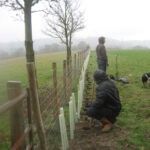
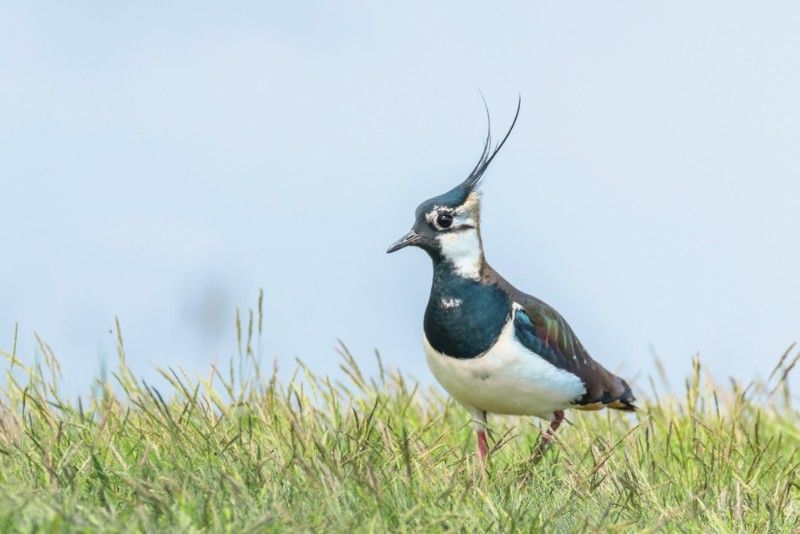
During the 1990s there was the set aside scheme whereby a percentage of land was put aside not to be farmed. You could also take on someone else’s set aside which we did giving us a large area of land that we did very little to except manage it for nature. It was a large open field and to our joy we had 5-6 pairs of lapwings nesting every year, the peewitting and dive bombing overhead becoming part of the joy of the summer season. There were plenty around then, they were in our neighbours fields and each year we looked forward to them arriving again. But, it was also at that time that farming practices led to a dramatic decline of 50% across the UK with the greatest decline in the lowlands.
"Lapwings can now only be found in pockets of farmland across the UK and I believe they will be a sight that will never be seen again at Romshed regardless of how we manage the land. This is the matter of shifting baselines – our children will never value their loss as they never know their presence. For me, this is a salutary thought."
Seeing what could happen to a field if you stop putting nitrogen or sprays on it opened our eyes to the possibility of converting to organic. When the set aside arrangements came to an end in 2000, the Government gave incentives to convert to organic so we took the opportunity to do just this. From the pasture point of view this resulted in the most significant and positive change to our pastures. It meant we had to totally change our approach to farming our pastures – we could no longer just put on chemicals, we had to find the solution in the management of the land and our livestock.
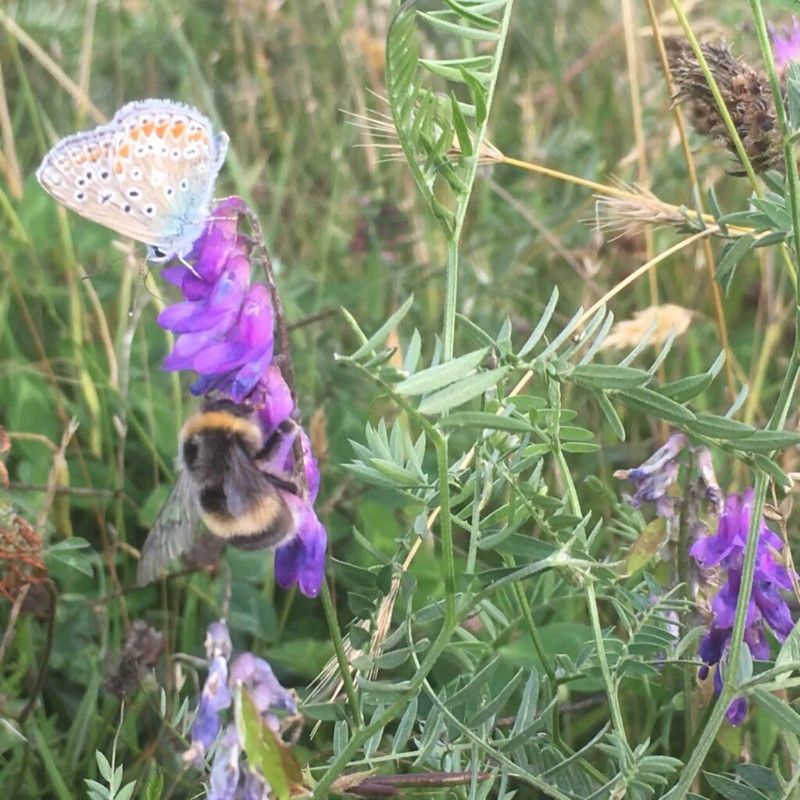
For the first two or three years our hay crop took a nose-dive as the species that responded to nitrogen went backwards and the dormant seedbed of native grass seed took time to take over. We persevered with encouraging the clovers back into our pastures and before too long our crop was back up to what it had been before and it was full of diversity, most especially in grasses. The fields now have many other species - most notably trefoils and vetches but a whole range of grassland flowers too.
My absolute top favourite being the grass vetchling which jumps out at you with its delicate cerise pink flowers. Our meadows are now awash with lesser stitchwort, knapweed, self heal, yarrrow, a variety of trefoils and vetches and an astonishing array of native grasses. These lowland meadows are nowhere near as amazing as the chalk Downlands or flood plain meadows but they are still a rarity and need to be encouraged.
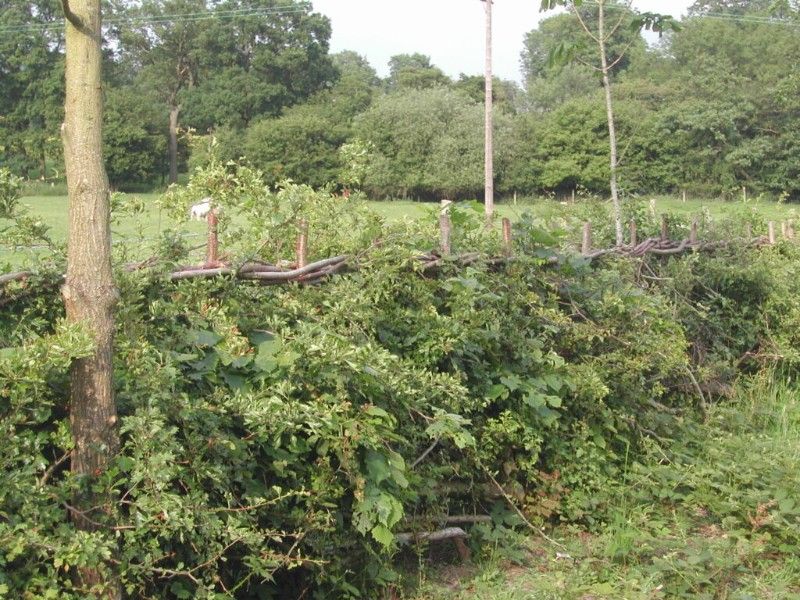
It was during this period that the Countryside Stewardship Scheme (CSS) assisted us in a programme of hedgerow planting which meant that over 10 years we planted literally tens of thousands of hedging plants, gapping up every single hedge and joining up all our small woodland shaws with hedges so that the rare dormice we had in our woods could travel from one to another. We have since then laid over 400 metres of hedges, with more to go, and been thrilled to find dormice in these hedges and they are now connected into the wider landscape. The shaws themselves are actively managed so we coppice areas to allow in the light benefitting the woodland flora species but also the moths, butterflies and insects that live there.
In 2000 we introduced cattle onto the farm having reduced the sheep numbers significantly. We moved to higher level stewardship payments and through this put in 20 acres a year of spring planted cereals. Almost overnight the skylarks appeared, and the linnets and other seed loving birds arrived to enjoy our specially left bird seed margin. It is a thrilling sound to hear them high above the fields but at the same time, our beloved flycatcher which would arrive every spring and nest in a tiny wooden box housing a light sensor by our front door failed to arrive and we have not seen it since.
Also under Countryside Stewardship we established a species rich wildflower meadow with seed from a donor site that matched ours. The seed came with 140 species in it, we now have around 40 species in that field. Over the 15 years it has been in place its diversity has varied enormously with species coming and going according to the season.
We had a new orchid arrive this year but there was no sign of any of the much treasured yellow rattle that has helped to keep the field in balance – hopefully it will be back again next year. This meadow has led the way in seeing an increase in diversity in all our meadows across the farm and I now fully appreciate how much it varies from one year to the next.
How the farm is to connected into the area beyond?
In the past I have been a trustee of Kent Wildlife Trust and a Meadow Ambassador under a Plantlife Magnificent Meadows Project.
This has meant we have got involved in projects in the wider community and one has been to get barn owls back into the area with volunteers building boxes and putting them up across the district.
Thirty boxes in about 30 square miles have been put up and we have six boxes on the farm. This year we were thrilled to have a successful breeding pair as we spotted a couple of youngsters taking their first clumsy flight along one of our hedgerows. We are hoping that our new rotational grazing will help to keep them around as we graze long grass and leave long periods of rest enabling the field voles a good habitat to breed and expand in numbers. These are the main food crop for the barn owl.
We have hosted many meadow events and shared our seed with others. We are now hoping to spread this out further and having some seed back at Romshed from other sites.
Are there any benefits to the farm that are directly attributable to the Pasture for Life approach and/or would be lost if there were no ruminant animals on the farm? In brief, what are the benefits from having ruminant animals on the farm?
The Pasture for Life approach is absolutely key to our biodiversity. If we did not have grazing animals on this farm it would quickly revert to woodland, of which there is so much in the area and our species rich pastures would be lost, along with all the food and habitat for a range of fragile grassland species.
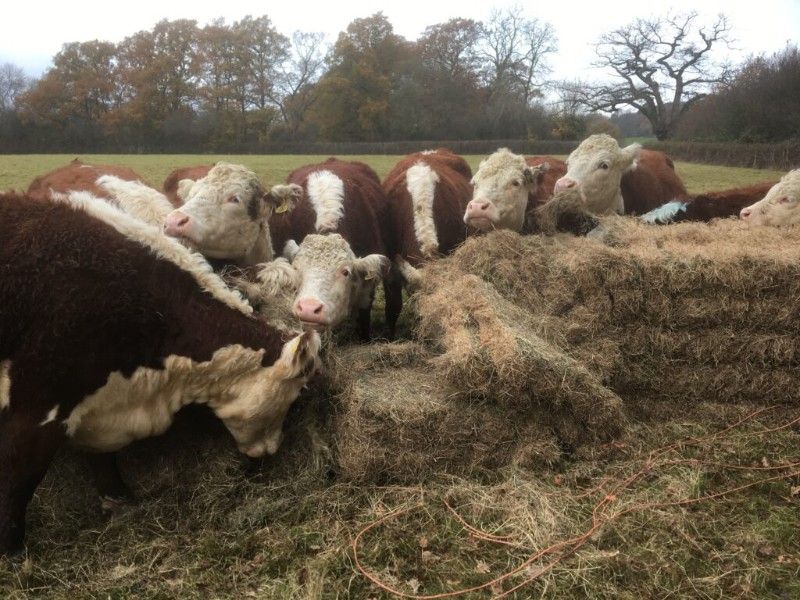
Moreover, we have entered a new phase in our management and thinking and are now moving our animals regularly and feeding them with species rich hay outside over winter with huge consequences for the introduction of species to all parts of the farm. We can see the positive impact in such a short time.
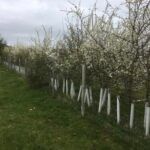
We have just entered a new Higher Tier CSS and are restoring another 5ha of species rich wildflower rich meadow. We have got electric fencing installed to fence off hedges and areas of woodlands, enabling the very important scrub to come back to the field margins but just as important putting in an infrastructure to the farm that will enable us to extend our rotational grazing so our cattle and sheep can quickly graze an area and move on. This keeps the land open and allows for grassland species to thrive but also gives the pasture time to recover, fully set seed if necessary and keep the biodiversity growing and enhancing.
"For me, this is the most exciting prospect – that we have grown our understanding and knowledge so that adding to the biodiversity goes hand in hand with the profitability of the farm."
I just hope that under the new UK Agricultural policy that recognition is given to supporting the two key farming systems that have brought us to that point – those are Pasture for Life and Organic.
"For me, this is the most exciting prospect – that we have grown our understanding and knowledge so that adding to the biodiversity goes hand in hand with the profitability of the farm."
[REMOVE LINK]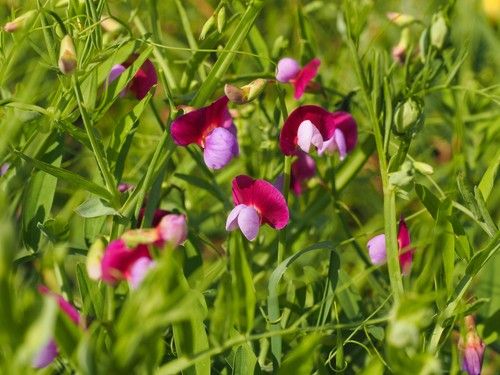
How do you monitor the biodiversity?
This is something I know we should be doing more systematically. We have done bird counts, species counts on the meadows and have had regular moth traps on the farm over the years.
"Just taking photographs can help to monitor the change and as a family we love telling each other what we have seen."
I have tried the Seek iNaturalist app which I think has the potential to be brilliant – it is free, you can take a photo and identify what you see, send it to a central database so they are doing the very important job of collecting the data and it effectively keeps a record of what you have seen and also others in the area. The one drawback is that it is not as good at identifying species as some of the other apps are but hopefully it will get there. It is an impressive and inspirational citizenship project I think and should really help us all to learn more and look out for things as we are going around.
There is probably far too much in my head and not enough recorded, something I keep intending to rectify but monitoring is a time consuming and hard thing to do really systematically.
"Just taking photographs can help to monitor the change and as a family we love telling each other what we have seen."
[REMOVE LINK]What lessons have you learnt?
If you want to do something for wildlife just get on and do it as in time it will pay off. Where we planted our little whips all those years ago we now have great lengths of hedgerows. Taking off the nitrogen gave us a hit but after a few years it was thrilling to see the changes – the sound of the insects in our fields is wonderful.
"I think the best two things we have done for wildlife on our farm is to stop putting chemicals and synthetic fertilizer on the land and stop feeding cereals to our ruminant livestock."
"Both have meant we have focused on the natural processes and how we can farm profitably with very few inputs and giving nature a chance to really do the best it can."
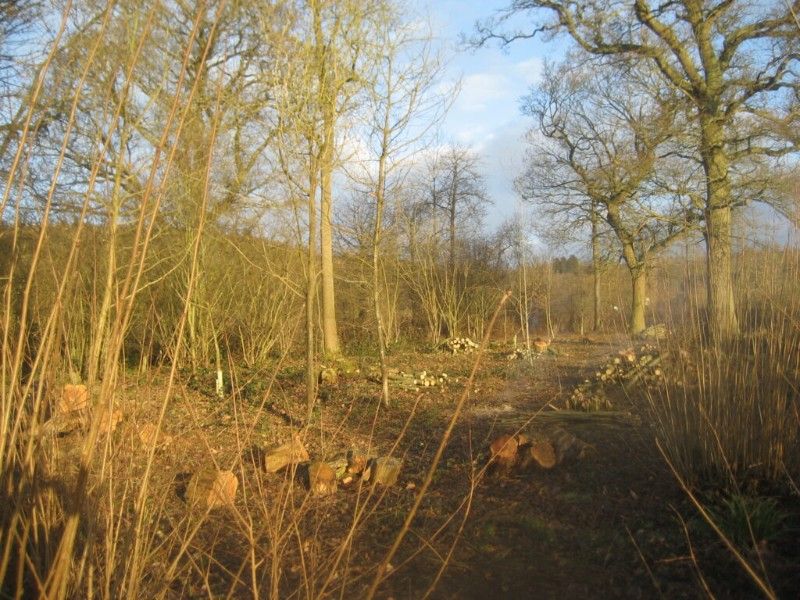
We have benefitted enormously from grants, without which we would not have done as much as we have. I hope that others can benefit from these too in the future. What these did for us was to pay for the capital inputs and we put in the labour. It gave us a real incentive to be ambitious and get on and do it and as a result our farm has an even better infrastructure of hedges, species rich pastures, woodlands and ponds than we might otherwise have had.
I truly hope that the Government can see how supporting farmers to adopt organic and pasture-fed farming systems could lead to a sea-change in farming in the UK. It would build biodiversity into the business model and everyone will benefit.
"I think the best two things we have done for wildlife on our farm is to stop putting chemicals and synthetic fertilizer on the land and stop feeding cereals to our ruminant livestock."
[REMOVE LINK]