

The Only Pasture for Life Certified Dairy In Cumbria
With ancient woodlands, varied pastures, and a thriving herd, Mark and Jen Lee are proving that dairy farming can be good for animals, people, and the planet.
BIODIVERSITY CASE STUDY
Park House Farm, Cumbria
Tell us about your farm – location, size, altitude, climate, soils, enterprises, organic/Pasture for Life/other status etc.
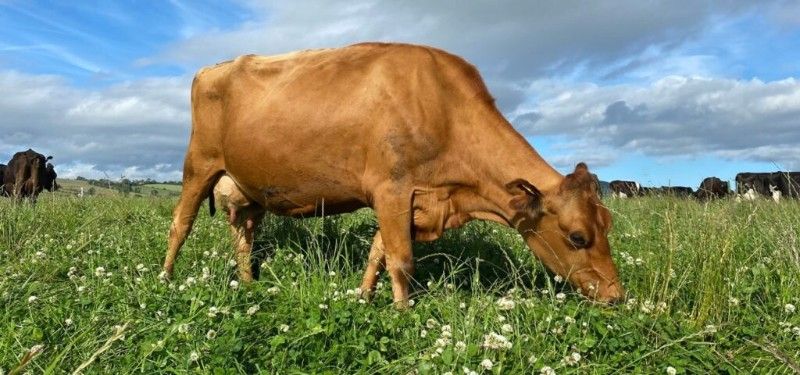
Our farm is 350 acres of permanent pasture, ancient woodland and wooded pasture, situated between the Northern Fells and the Solway Firth in North West Cumbria. It lies approximately 400 feet above sea level with a mixture of sandy loam and clay soils. The gulf stream brings plenty of wet weather throughout the year but also a degree of warmth which provides ideal growing conditions for the diverse species in our pastures. We have 220 Jersey x Friesian cows and followers on a spring block calving system, where we rotationally graze set paddocks for 300 days of the year. The farm is Organic and Pasture for Life certified and now produces cheese and gelato which we sell direct to the public and through other retailers.
Give us a picture of the biodiversity on your farm – essentially above ground (but reference to below ground if relevant) – both flora and fauna.
The farm is an ancient deer park with an old pebble and rock boundary still standing on the southern part of the farm. This has historically led to more woodland within the farm being preserved. Stretches of ancient woodland line the Cockshot Beck, which is the main water course that runs the length of the land East to West. The majority of the woodland is native Oak, Ash, Sycamore and Willow with additional species of black Walnut, Poplar, Alder and Beam being planted last year.
The fields are a muti-species mix of grasses, clovers and other legumes which are essential to fix the nitrogen in our 40-day rotational system. Most are classified as permanent pasture and have been overseeded since our conversion to organic due to the previous monoculture of ryegrass not meeting the nutritional needs of the pasture-fed herd.
4km of native hedgerows have been planted over the past 5 years to split the larger fields into smaller grazing paddocks and interconnect the blocks of woodland throughout the farm. Deer, Badger, Hare, Foxes and Rabbits
are commonplace, together with recent sighting of Curlew which were once common on the farm but which had not been sighted for a decade. Three species of bat have been identified along with many birds including Heron, Swallows, Gold finches, Thrush, Sparrows, Buzzards, Sparrow Hawks, Barn Owls, Little Owls and Kingfishers.
"4km of native hedgerows have been planted over the past 5 years to split the larger fields into smaller grazing paddocks and interconnect the blocks of woodland throughout the farm."
[REMOVE LINK]What you do to encourage this biodiversity?
To encourage biodiversity we mob graze the cows, maintaining at least 40 days between grazings to allow complete regeneration of the sward. We have begun a wooded pasture project which should cover over 100 acres, creating a very good habitat for multiple species. Field corners have been fenced off and several large scrapes and ponds have been dug to encourage some wetland bird and reptile species to thrive on the farm. 4km of hedgerows have been planted with a further 2km planned for the next year. No artificial or chemical inputs have been applied to the soil for the last 6 years, resulting in a huge increase in dung beetle activity. We have operated a no- till policy on the farm since 2017 and aim to grow soil as the building block underlying the farms biodiversity and profitability.
How is it connected across the farm and beyond?
The biodiversity and wildlife are connected across the farm with the woodland interconnected by the hedgerows, which form a patchwork quilt type shape across the landscape. Our vision of creating more wooded pasture and developing the diversity of flora and fauna with bale grazing hay will improve this richness further.
What are the benefits to the farm and is it increasing its climate and business resilience? If so, in what way?
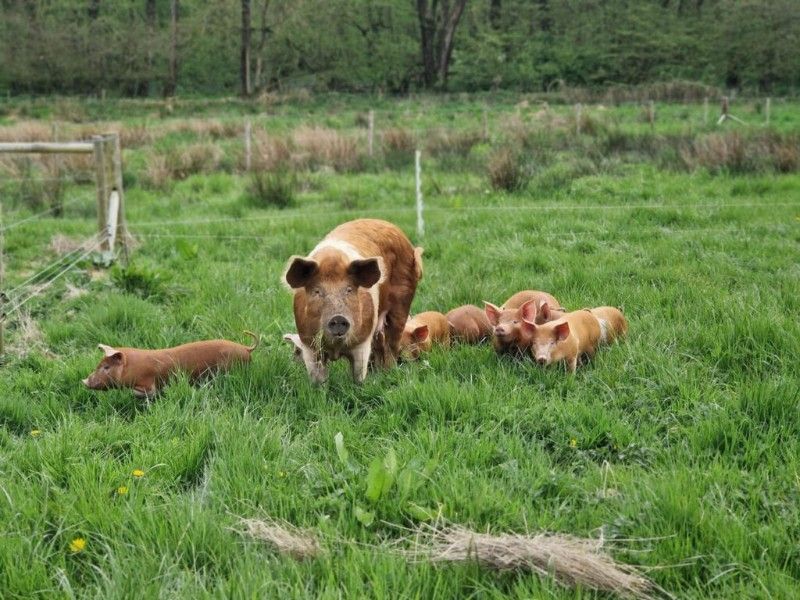
We have noticed a shift in the climate just in the last 10 years that we have been farming, with a long period without rainfall each year for the past 6 years. Our old system of shallow rooted monoculture ryegrass would have suffered from these episodes. In contrast, having decided to plant deep rooted multi-species leys our grazing rotation has not been affected so far. The clovers and other legumes seem to do particularly well in these dry periods. Our increase in tree cover is also part of our long-term strategy to reduce the heat on the cattle, pigs and soil over the
summer and provide shelter during the winter months. Farming regeneratively allows long periods for the soil and fields to recover, which helps with the heavy rainfall periods of which recently we are also seeing more. Creating healthy, deep soil with a decent covering of diverse grasses and legumes allows our small cows to graze at the shoulder ends of the year, often 3 months before and after our neighbours. Farming in this nature-friendly, positive way also provides a fantastic story which is very important when building a brand for the farm and selling the products which ultimately generate the cash needed for the farming enterprise.
Before committing to being 100% pasture-fed we were told it would have a negative effect on animal health and farm profitability and that it wasn’t possible this far north. We are the only certified dairy herd in Cumbria at the moment and it is important that we can show that this way of farming is both sustainable and profitable. What we have discovered is an improvement in herd health and a very significant reduction in our costs of production, simplifying the system for both cows and humans.
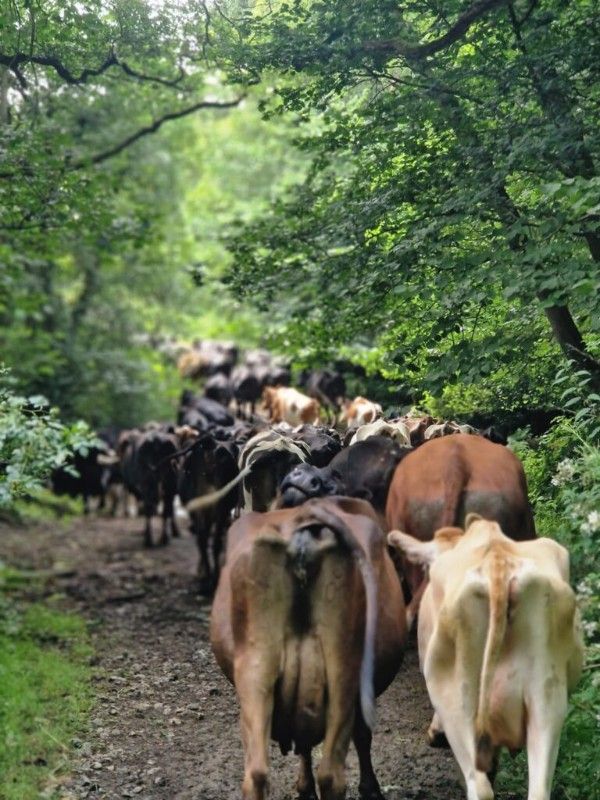
"We are the only certified dairy herd in Cumbria at the moment and it is important that we can show that this way of farming is both sustainable and profitable."
[REMOVE LINK]How do you monitor it?
Originally, we monitored grass growth weekly with a plate meter on each paddock. However as we grew more legumes and clovers in the sward we discovered that the cows would selectively browse what they needed. And so we moved to a time-based rotation rather than one based on grass height. We have had several people on the farm monitoring dung beetle and insect populations, which we were delighted to find were very high. As part of the most recent Down to Earth Conference, which is a one-day event organised by the Royal Association of British Dairy Farmers to interest livestock farmers in regenerative farming, in July we hosted a thousand farmers and made some great contacts both within the Pasture for Life community and the regenerative farming group. Some of these contacts have helped us to identify individuals who will provide us with a biodiversity base line so that we can measure any changes moving forward.
Are there any benefits to the farm that are directly attributable to the Pasture for Life approach and/or would be lost if there were no ruminant animals on the farm? In brief, what are the benefits from having ruminant animals on the farm?
When we considered changing our feeding to 100% pasture-fed we read around the subject and spoke to several other pasture-fed dairy farmers to really try and understand the issues involved. It made sense to feed the cows on what we grew on the farm and also to provide as much diversity so that they could choose what to eat. Adopting this approach has made us think more clearly about what our herd needs for its health. This in turn has made us want to try and graze the cows all year around, which drives our wooded pasture plans. When we engage members of the public at farmers markets the general understanding is that cows should be grazed outside for most of the year and we totally agree.
"When we engage members of the public at farmers markets the general understanding is that cows should be grazed outside for most of the year and we totally agree."
[REMOVE LINK]What lessons have you learnt and would like to share with others?
We are still learning a lot about farming without inputs and still striving to improve. Our first learning point to take away is that the farming world has been structured to sell products to the farmer and in order for us to achieve profitability these inputs need to be reduced. If we had listened to the generic advice out there, and the problems we were told would arise, we would not have changed to become Pasture for Life certified. Do your own research and speak to farmers who are already farming with nature and then make up your own mind. The second main point we learnt is that to change, and to see a benefit, takes several years. Patience is generally something that is in short supply and from the increase in sward diversity to the weaning cows off grain there are lots of bumps on the road. Don’t give up at the first hurdle and keep asking “why not?”. Finally we have learnt to appreciate that nature can be very forgiving and can both recover and flourish once given the freedom to do to. To take away the props of conventional farming requires both faith and patience but in time nature will bring you its own appreciation and reward through increased biodiversity and resilience.