
-1920x850.jpg)
Belted Galloways, Hay Meadows & Wildflowers in the Dales
Farming Belted Galloways and sheep to support birds, orchids, and wildflowers in the Yorkshire Dales.
BIODVIERSITY CASE STUDY
Hill Top Farm, Yorkshire
Tell us about your farm, its location, size, altitude, climate, soils, enterprises, organic/PfL/other status
We are in the Yorkshire Dales near Malham in the National Park. My family have farmed here for a long time, my Dad farms here, my grandad on my Mum’s side farmed here, and in total we farm 1200-acres, a mix of rented and land owned by my parents. Just over half of our farm is tenanted, with 3 to 4 different landlords. Our farm runs from the village, 800 ft above sea level to 1800 ft above sea level, rising quickly.
The farm is mainly on limestone bedrock and the Mid Craven Fault, which is 50% limestone and 50% millstone grit. It’s interesting for biodiversity and each area requires different management. The farm is permanent pasture with 40 acres of species-rich hay meadows. We have a 40-strong calving herd of belted Galloways, 80 Swaledale and Wensleydale sheep, the latter mainly kept for wool as well as lambs. Each fleece commands about £45 because it’s high quality for spinners and heavy. We get £15/kg and each sheep’s fleece is about 3kg in weight. We are Pasture for Life Certified, organic certified with the Soil Association and also part of the steering group for the Nature Farming Group.
Share with us a general description of the biodiversity on your farm – essentially above ground (but reference to below ground if relevant) – both flora and fauna.
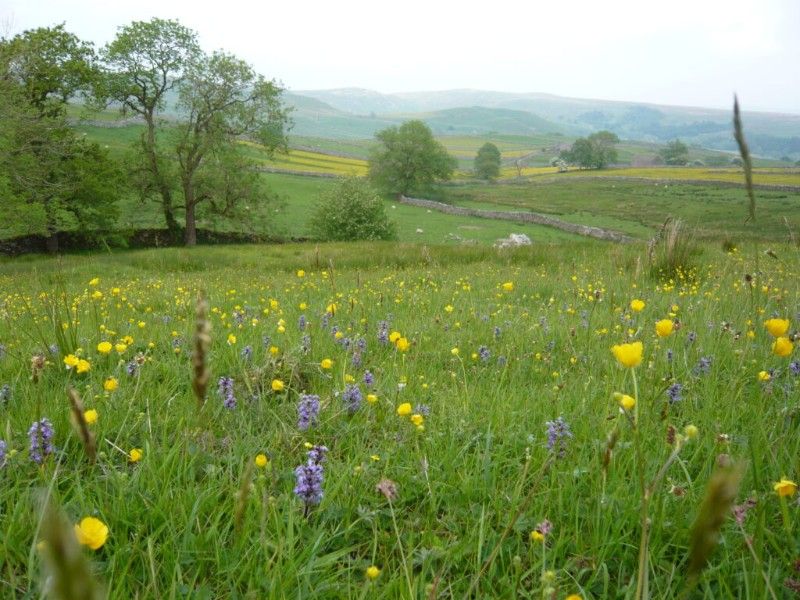
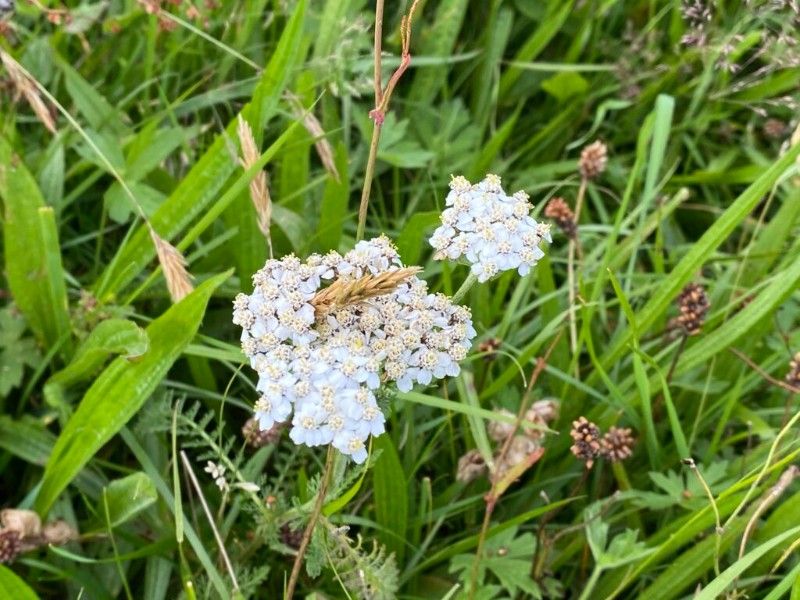
In general terms, we’re farming on limestone and we’ve learned we need to try and create the right conditions for a unique type of biodiversity on our limestone areas. We encourage the biodiversity as much as possible on our limestone areas and benefit as a result. Early on, we got involved in a Limestone Country Project - whose emblem was a species called bird’s-eye primrose - managing for other similar plant types including alpine species; tiny limestone plants such as cowslips, sedges, bird’s-eye primrose, wood anemone, yarrow and harebells. All of these species are synonymous with limestone areas and pasture.
The management of the areas are similar in terms of creating the right conditions for wading birds. Part of our land is the Great Close Mire, which was involved with a European project called The Limestone Country Project, a European designation wetland Ramsar site, which we have a lot of triple SSSIs, a National Nature Reservation, as well as Higher Level Countryside Stewardship agreements. Great Close Mire as its name suggests has a mire and wetness. Limestone creates unique conditions, draining exceptionally well because limestone pushes water out of the hillside.
Unique to this site are 3 to 4 different orchids, for example, autumn and field genshins, and mountain pansies. Although I’ve never seen one, an example of a species unique to this environment is a snail which is the size of a pin head. To encourage this unique environment, we manage the areas specifically for biodiversity, and we see a kind of layering of species by deploying the same management for all. Hay meadows and botanical species are all important for ground nesting birds and wading birds. On Great Mire alone, there are 5 to 6 red listed species of bird.
Our bird life includes red shanks, snipe, curlew, skylark and lapwing. The migratory wheatear returns in spring. We see hares, and our barn owl boxes attracts the owls regularly, monitored alongside the British Trust for Ornithology. Woodcock have increased in the last couple of months because different rock types and mill stone grit suits them better. Hopefully, it’s because we are managing the land for biodiversity first and foremost and the farm must fit in around that.
What you do to encourage this biodiversity?
Back in 2004, as we mentioned before, we took part in the European project called The Limestone Country project. It focused on native breeds of cattle grazing on limestone pastures. We’d seen how subsidies were paid through the 1990s and early 2000s, resulting in a shift in how the limestones areas were grazed, essentially overgrazing and too many sheep.
So, the project was about reversing the impact of subsidies and grazing practices, by re-introducing native breed cattle and fewer sheep. We got involved and acquired 19 Belted Galloway heifers to change the density of grazing as well as the species doing the grazing. We changed the time when grazing started and ended. We let pastures grow from May to August with no grazing and then out-wintered the cattle, grazing them throughout winter only to allow flowers to set seed and ground-nesting birds and their fledglings the space to thrive. We saw at firsthand what can happen, managing the land to have a positive influence on biodiversity. And conversely, we still had 600 sheep on the farm, managing some areas in this new way and some differently with the sheep. As we started to see the impact of our grazing regimes on the farm, we realised if you’re managing land in a sympathetic way, with biodiversity upper most, you get results.
At the time, when we look back, we see how much of an influential time it was; it changed our whole philosophy. We had had a production mindset, but our new process for managing grazing changed our philosophy into one that farms with nature. Nature is at the forefront of our mind and we harness natural processes entirely if we can. If farm animals are treated as part of Nature, in a natural habitat, they can almost live without our intervention! They can live, thrive and breed; we just need to create the right conditions and habitat for them. We aim to live in harmony, treating them in the same way and with the same theories as we do Nature.
Economically, we firmly believe farming with natural processes is the best thing we could have done for the profitability of the farm, and the farm is now more resilient and profitable, whether in the face of tough trading conditions or changing weather patterns. We can now withstand whatever life throws at us and can ride those waves better than ever before in every way - we’ve always got feed for animals! To add to that, we’re working fewer hours on the farm because the animals are less reliant on us, it’s about grazing not feeding, not about mucking out. We just create the right habitat and they do the living themselves.
How it is connected across the farm and beyond
Good question, it doesn’t!
Other local farms are managed under Countryside Stewardship but I don’t think there are many farms that are managed in the same way, with the same ethos and all contained within the land they are farming. We connect with one or two other people in the locality, there’s a rewilding project in Skipton, but it’s in its infancy, so we’ll wait and see.
What are the benefits to the farm and is it increasing its climate and business resilience? If so, in what way?
We think it’s a multiple win. We aren’t comparing ourselves to others, but where we were in 2012 and before, was all changed by the Limestone Country Project. It really was a game changer, both for us as people and for how we farmed.
And as a result in 2012, we got involved with Pasture For Life via John Meadley, we went to the first Oxford Real Farming Conference in 2013 and both were defining. They both gave us the confidence in our thinking because we could see there were others out there thinking and doing as we were. It gave us the confidence to change and shift how we farmed in totality and how we farmed our sheep. We reduced our flock numbers, and less became more. Biodiversity and profitability took our farm down a very different direction with a different mindset, and we think we’re winning!
We’ve put ourselves in a better position in almost every way you can measure; impact on climate, on-farm biodiversity, the amount of work we now do or don’t do, ROI on each hour we work, quality of life outside the farm, and the resilience of the business and the animals. We believe we’ve put ourselves and the farm in a better place! We will still be farming here in 5 or 10 years’ time because we can withstand whatever comes. One of our landlords is The National Trust. We’ve explained what we’re doing as we’ve gone along, and although we had the odd look of concern and questions about thistles and the visuals of the land, we’re very much supported. Our main method of weed control is scything, with someone in to do that for 3 weeks every year.
How do you monitor it?
One of our regrets is that we didn’t start monitoring biodiversity and the changes even sooner, either with pictures or more formally. We work with the National Park, The National Trust land and Higher Level Stewardship to monitor the changes. We have figures from 2006 and 2007 but they’re probably not detailed enough. My advice would be to try to monitor more, even photos are a good way to monitor what’s happening and changing. I can also tell you what I see anecdotally and in some areas we’ve had botanists looking out for certain species.
"My advice would be to try to monitor more, even photos are a good way to monitor what’s happening and changing."
[REMOVE LINK]What lessons have you learnt and would like to share with others?
One regret is that we didn’t do it sooner! In the agricultural community, I think there is a bit of ‘either farm in the conventional way or get out!’. I firmly believe there is a way that is a middle ground, somewhere in the middle of two extremes and the middle ground can deliver for nature, climate, farming and food production, and is a healthier product for humans to eat.
This is the middle ground, it’s right environmentally, economically and socially, delivering from all three perspectives.
"I firmly believe there is a way that is a middle ground, somewhere in the middle of two extremes and the middle ground can deliver for nature, climate, farming and food production, and is a healthier product for humans to eat."
[REMOVE LINK]Species examples at Hill Top Farm:
Common Twayblade Orchid, early marsh and other marsh Orchids, fragrant Orchid, bird's eye primrose, butterwort, spearwort, marsh-arrow grass. A whole host of sedges including carnation, glaucous, tawny, flea, star, dioecious, yellow as well as saw-wort, horseshoe vetch, Northern bedstraw, yellow rattle, common cottongrass, lousewort and marsh valerian. Loads of other plant species, too many to mention here.
Read more about Hill Top Farm here.