


Chalk Grassland: The Rainforest of Europe
Without grazing livestock, the richness would be lost because the grassland would scrub over.
The Key Role of Livestock
Chalk Grassland's Abundance
An exploration of why species-rich chalk grasslands are among Europe's most important habitats.
You can find around 40 species in ten square feet of chalk downland. Without grazing livestock, that diversity would be lost because the grassland would scrub over.
With the South Downs National Park, we have created two films unpacking the diversity of chalk grassland and the vital role grazing livestock play in preserving and restoring it.
Watch the films here. (INSERT YOUTUBE PREVIEW)
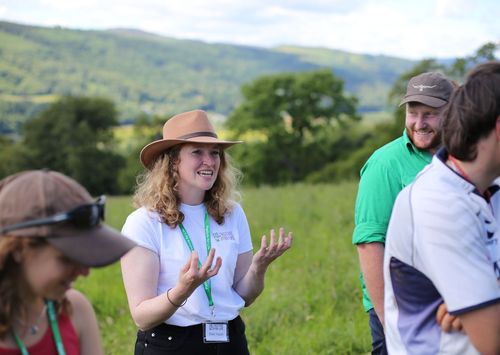
Annie Brown, Warren Valley Farm, South Downs.
"Chalk grassland has the accolade of being the rainforest of Europe; if you threw a quadrat down you’d find a huge number of species."
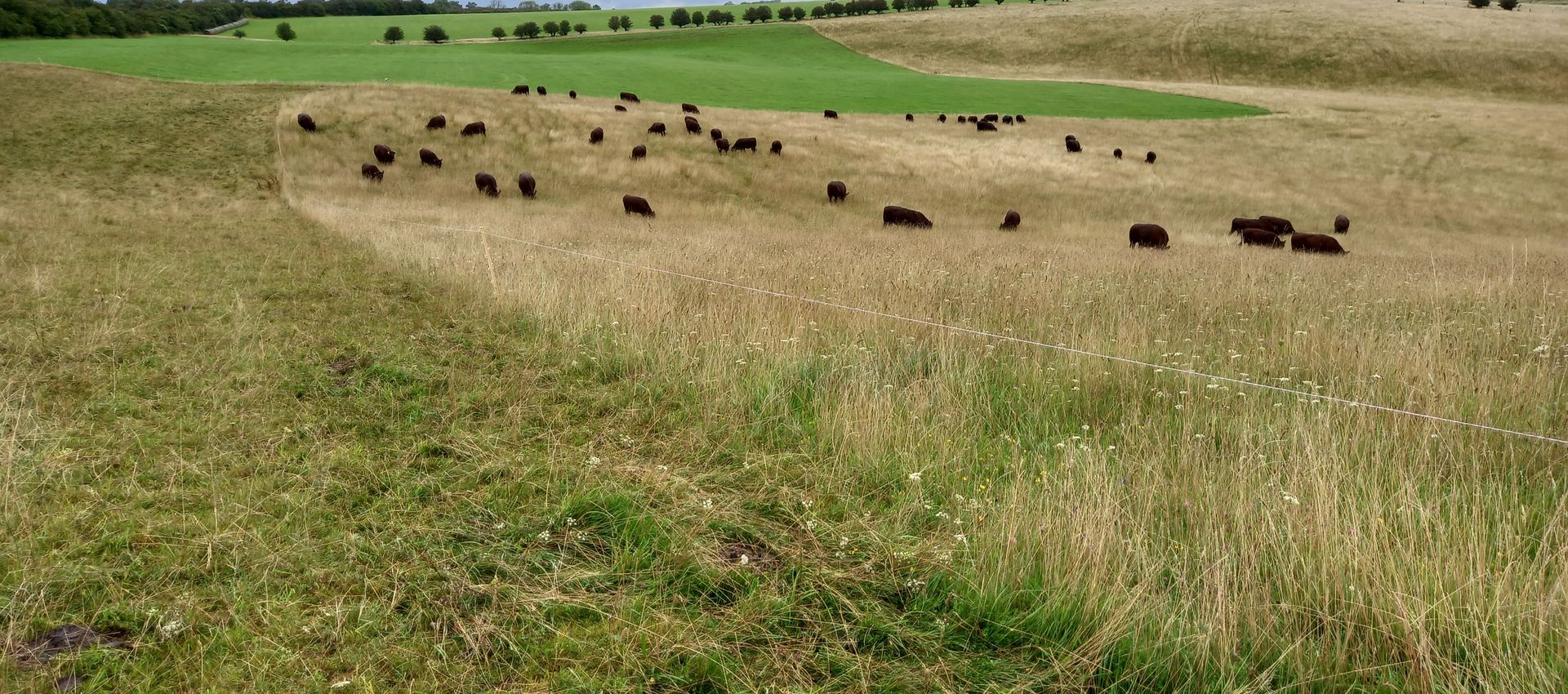
[REMOVE LINK]Without grazing livestock, the sensitive chalk grassland species will eventually be taken over by scrub and vigorous grasses. The key is to manage the grazing to ensure that these sensitive species aren’t also eradicated by overgrazing but are given the chance to reproduce and spread. With mob grazing, livestock are moved from place to place, so that recently grazed areas are allowed to recover properly. It also allows farmers to move animals strategically to create a diversity of habitats and conditions, rather than grazing every area in the same way.
Jan Knowlson, Biodiversity Officer, South Downs National Park.
"Livestock is absolutely essential for managing chalk grassland."
[REMOVE LINK]The key change was a shift away from set stocking four years ago – since then they have rotated animals more quickly through electric-fenced paddocks in a management system known as Adaptive Multi-Paddock Grazing (AMP), commonly referred to as rotational grazing. This has allowed Roly to provide significantly longer rest periods for pastures once they have been grazed, which allows for a much wider range of species including orchids to flower and set seed, before they’re grazed off again.
In the summer animals will generally be in an area for no more than four days, more typically two or three, to ensure they aren’t grazing the regrowth. In the winter they are moved onto fresh grazing more regularly, particularly if it’s wet, to reduce the risk of them poaching and creating too much bare soil. Puzey states that 10 years ago they were ‘tidier farmers’ saying, ‘it’s a bit of a mindset change.’
Hugh Passmore’s family have farmed Applesham Farm since 1900. It is a mixed livestock and arable estate, with sheep and a suckler herd of cattle. There is an exceptional richness of species diversity in their chalk grassland, with over 140 species of plant counted at the most recent survey.
Hugh’s arable fields lie below a bank of chalk grassland which he states ‘was only ploughed during the Napoleonic wars, with oxen.’ The arable rotation is two years of wheat, followed by three years of spring barley. Between each crop is a catch crop of forage rape or mustard for the sheep to graze, with the last barley crop undersown with grass; once this is harvested, the fields are left to a grass ley for 3 years and grazed by livestock. During the grass period of the rotation the rare chalk grassland species aren’t as visible due to the grazing. When the fields are in barley and wheat they aren’t grazed until after the crop is harvested in late august, allowing ample time for rare species including orchids to flower and set seed for several years in a row. Hugh states that the incredible diversity appeared through natural regeneration.
"First and foremost we’re farmers, looking to produce food. But the way we farm also encourages the environment. I love seeing that as much as I love seeing a good crop of wheat. … The traditional mixed farming practices also support a wider variety of wildlife, including rare farmland birds such as grey partridge, corn bunting, and skylarks."
(Remove link)Annie Brown is a 3rd generation farmer at Warren Valley Farm in the South Downs. Her farm runs a mix of cattle, sheep and goats, each playing a different role in the management of the grassland; the cattle eat the taller, ‘stemmy’ grasses, the sheep are a ‘lawnmower’ and the goats prefer to browse the scrub and weeds. The goats’ entire role in the farm is to manage scrub encroachment.
Hugh Passmore uses his breeding ewes and suckler cows to manage his species-rich grassland, with the cattle being adept at grazing taller, tussock-forming species and the sheep picking around the shorter species. During the arable rotation, his livestock don’t get access to his species rich grassland until after the crop has been harvested in late august, meaning the plants get a chance to set seed and proliferate. During the temporary ley part of the rotation the area is grazed more fully, but the rich and established seed bank means that as soon as the fields are shut up for wheat or barley they wildflowers have the chance to thrive.
Watch the films here. (INSERT YOUTUBE VIDEO PREVIEW)