


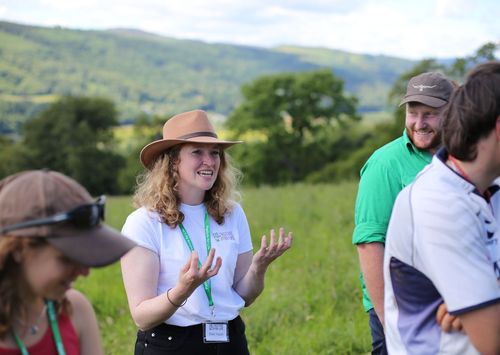

SEFARI report
SEFARI Gateway and NatureScot, have commissioned research to study how Scotland’s Agricultural Knowledge and Innovation System (AKIS) could support a just transition to sustainable and regenerative agriculture.
SEFARI report
Scotland has committed to becoming a global leader in sustainable and regenerative agriculture
Scotland has committed to becoming a global leader in sustainable and regenerative agriculture, with this ambition embedded in the Vision for Agriculture (2022), the Agriculture and Rural Communities (Scotland) Act 2024, and the Code of Practice on Sustainable and Regenerative Agriculture (2025). Achieving these goals requires an Agricultural Knowledge and Innovation System (AKIS) capable of supporting land managers through complex, long-term transitions under increasing climate, economic, environmental and regulatory pressures.
This research investigates the capacity of AKIS Scotland to support a just transition, including recommendations for Tier 4 support framework.
A literature review, an online survey, semi-structured interviews, case studies analysis, and five workshops (three in person and two online) involving more than 120 participants from across Scotland and representing all type of AKIS actors were carried out to collect both qualitative and quantitative data.
Dr Nikki Yoxall, Technical Director Pasture for Life
'For Pasture for Life and our members, the report reinforces something we have long understood: farmer-to-farmer learning and practical experience are fundamental to supporting resilient, low-input farming systems.'
Read the full reportAt a glance
Quote from Dr Nikki Yoxall, report joint author
"Scotland already has many of the building blocks needed to support a transition towards more sustainable and regenerative agriculture, but our findings show that knowledge exchange cannot simply be delivered through top-down information transfer alone. Farmers consistently highlighted the importance of trusted relationships, peer-to-peer learning, practical on-farm experience and advice that is locally relevant and grounded in real farming systems.
For Scotland, this means we need to move beyond fragmented and compliance-driven approaches towards an Agricultural Knowledge and Innovation System that is more connected, collaborative and farmer-centred if we are serious about delivering the ambitions set out in the Vision for Agriculture and wider climate and biodiversity goals.
For Pasture for Life and our members, the report reinforces something we have long understood: farmer-to-farmer learning and practical experience are fundamental to supporting resilient, low-input farming systems.
Our members are already demonstrating the value of locally adapted, pasture-based approaches that work with ecological processes while producing nutritious food and supporting rural communities. The challenge now is ensuring that these kinds of networks, relationships and forms of knowledge are recognised and properly supported as central to Scotland’s agricultural future.”
Related resources

- News
- Opinion
- Blog
- Cattle
- Welfare
- Soil
- Profit
- Grassland
Maximise the Benefits of Outwintering Cattle
Outwintering cattle can reduce costs, support cattle health, and improve soil health, if properly planned.
13/08/25
-500x500.jpg)


-500x500.jpg)