

Methane Facts
What is Methane?
- Methane is a naturally occurring greenhouse gas (GHG) released from wetlands, thawing permafrosts, active volcanoes, decomposition and ruminant digestion i.e. enteric methane.
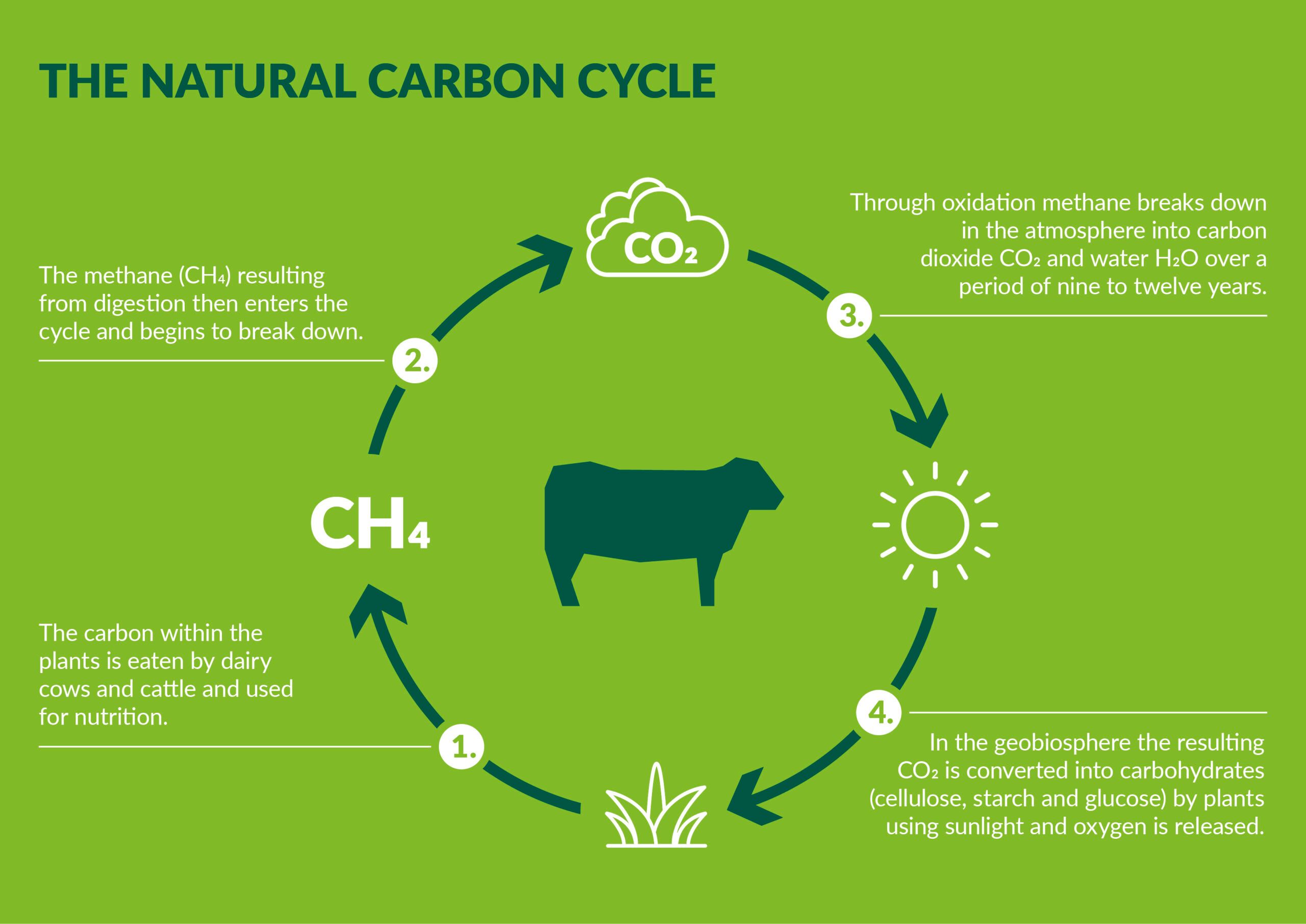
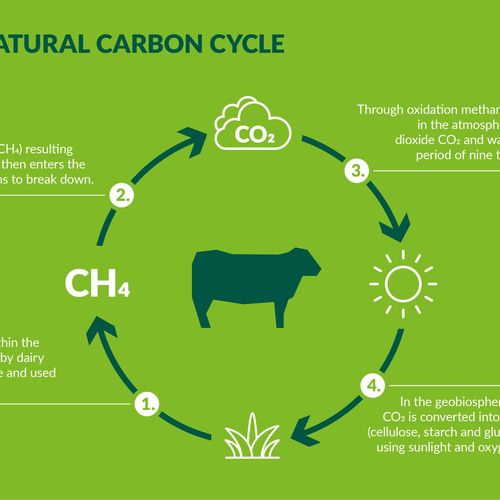
- Once released into the atmosphere, methane oxidises into carbon dioxide (CO₂) over approximately 12 years. This CO₂ can be reabsorbed by plants through photosynthesis if part of a balanced carbon cycle,
- Since industrialisation methane emissions are also produced from human activities such as landfills, fossil fuel extraction and intensive agriculture where intensive livestock system manure storage represents a management related methane source.
- Fossil fuels unlock carbon reservoirs, adding to atmospheric GHGs in much higher levels that plants are unable to re-absorb. (Fig.1)
Fig. 1- Natural carbon Cycle
Why are there calls to reduce methane emissions in agriculture?
In the UK, agriculture accounts for 11%* of all GHG emissions, with over 5%* attributed to methane from two primary sources:
- Enteric Fermentation – Methane released during ruminant digestion
- Manure Management – Methane emitted from stored manure
Methane is a potent GHG with a global warming potential (GWP) 28 times that of CO₂ (over a 100-year period) and so is much more effective at trapping heat and this, coupled with its relatively shorter lifespan of 12 years make it a key international target for rapid climate mitigation.
The UK government has already signed up to reduce UK methane emissions by 30% as part of the COP26 Global Methane Pledge.
Climate Impact Report 2024
Reducing methane emissions is one of the fastest and most effective ways to slow near-term climate change, avoiding critical climate tipping points and protecting ecosystems.
More on methaneHow can agricultural methane emissions be reduced?
Pasture for Life toolbox for mitigation
As pasture-fed systems are low-input, the mitigation strategies our farmers can employ are based around reducing their own reliance on fossil fuels and restoring the balance to become net sinks of carbon through the following practices:
- Comprehensive reduction in fossil fuel reliance through operating a low input system (fertiliser, bought in feed and fuel).
- Adaptive multi paddock grazing and appropriate carrying capacities: creating healthy soils and pasture to maximise carbon uptake through photosynthesis.
- Promote carbon draw down and sequestration: through permanent pasture and woodland/hedgerow planting and management.
- Maximise outdoor grazing: animal deposits decompose naturally into the soil, minimising manure management emissions
- Promote diverse swards: research indicates that tanniferous plants like plantain, willow, sainfoin, and bird’s-foot trefoil in pasture can reduce enteric methane emissions naturally.
- Improve herd efficiency through breeding traits: select animals that have good fertility, efficient growth, that thrive on your pasture to lower methane emissions per unit of production.
Conventional toolbox for mitigation
There are a number of tools that are already either in use or in development. Whilst PfL do not collectively support them all, we recognise conventional supply chains and government policy are seeing these as a way to mitigate methane. It is likely necessary that some combination of PfL and national mitigation strategies are required, most of which are beneficial to improving the resilience and efficiency of the sector overall.
- Increasing lifetime production efficiency: maximizing the productivity of each animal over its lifetime can reduce methane emissions per unit of meat or milk, improving emissions intensity. However, this focus on efficiency is often also driving intensive production systems that require reliance on high-emission production systems, potentially negating the benefits of reduced emissions per unit.
- Genetically select for lower-emitting ruminants: with higher digestion efficiency, smaller rumens and reduced enteric fermentation.
- Reducing societal ruminant meat and milk consumption, coupled with developing alternative proteins. This should of course be achieved through emphasizing the 'less and better' approach where we ensure the meat and milk we do eat is from regenerative, pasture fed systems, with higher nutritional value, that also offers additional ecosystem services.
- Improve manure management: Convert manure into biogas and capture methane from slurry storage, mitigating methane and providing renewable energy.
Additives and Vaccines
There are a number of products coming onto the market that target methane-producing bacteria in the rumen to significantly lower methane emissions. Pasture for Life holds deep concern for the effect that disrupting a rumen microbiome might have on the animal's digestive system and the wider cumulative impact on human health of consuming milk and meat from animals exposed to these additives. We strongly advocate for system change to create balance through appropriate carrying capacities as a much better route to methane mitigation.
It is also imperative that we take a holistic approach in our assessment of all agricultural problems and the solutions we then use should deliver for all stakeholders: livestock, farmers, nature and society.
Future Research
We currently lack a comprehensive understanding of methane emissions from pasture-based systems. Research on methanogens (rumen bacteria producing methane) and methanotrophs (bacteria breaking methane down) in grazing environments is particularly limited. Improved knowledge is critical to ensure pastoral systems are accurately represented in emissions models.
More research
- Research
- Case study
- Land
- Soil
- Pasture & Profit
- Water
- Biodiversity
- Farmers
- Peer-to-peer
Pasture and Profit summary outcomes
An innovative peer-to-peer knowledge exchange model, facilitated by regional programme teams, led by experienced co-ordinators.
11/05/26

- Membership
- FAQs
 Members only
How to use the Pasture for Life forum
17/03/26
-500x500.jpg)

-500x500.png)