

Statement on Net Zero
The conversation around agriculture and climate change has become increasingly dominated by the concept of achieving Net Zero, which is a balance between greenhouse gas emissions produced and those removed from the atmosphere. However, the pathways and methodologies used to define and measure progress towards this goal often oversimplify the complexity of natural systems and farming practices. Within this policy landscape, livestock agriculture is frequently identified as a major contributor to emissions, with limited distinction made between industrial, high-input production systems and low-input, nature-based systems predominantly operating within the boundaries of a closed carbon cycle.
Pasture for Life recognises the urgency of addressing climate change and supports evidence-based approaches to reducing emissions. Yet we believe that achieving meaningful climate action in food and farming must be grounded in an understanding of whole-system impacts, including biodiversity, soil function, and ecosystem health - not just carbon metrics.
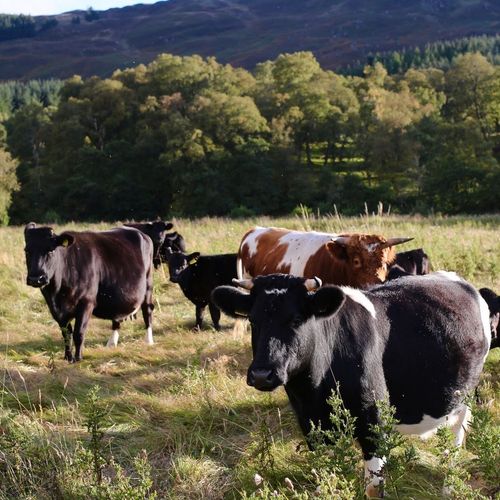
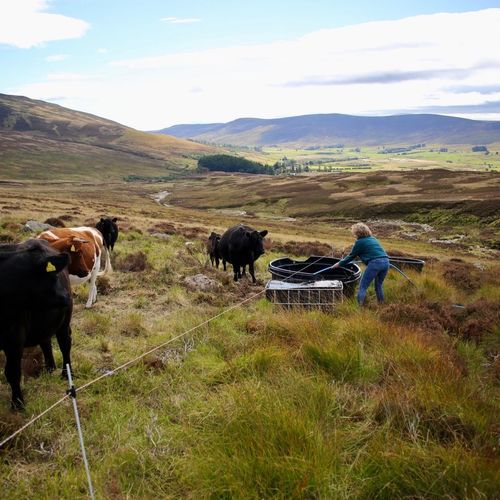
Rottal Estate by Clem Sandison
We fully accept the IPCC's statement that human activities, principally through emissions of greenhouse gases have unequivocally caused global warming, with global surface temperature reaching 1.1°C above 1850–1900 in 2011–2020.
We also accept their view that global greenhouse gas emissions have continued to increase, with unequal historical and ongoing contributions arising from unsustainable energy use, land use and land-use change, lifestyles and patterns of consumption and production across regions, between and within countries, and among individuals.
We recognise that industrialisation, mass levels of consumption and land uses that degrade plants, soils and ecosystem processes have been significant drivers in our changing climate. We also recognise that we are living in a time of multiple crises - climate change, biodiversity loss and human health.
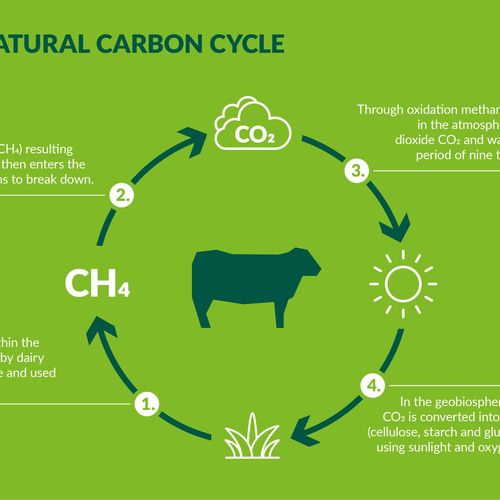
We do have concerns about the methodology used to assess farm and sector level emissions as we know the data do not exist for 100% pasture fed, low to no input ruminant systems, and so in terms of our membership and certified farms we are deeply concerned that they are not just under represented, but unrepresented in terms of assessment. Furthermore, the linear input/output emissions assessments, whilst effective for reflecting linear processes, do not reflect the natural cycles many of our members are working with in their biodiversity based, agroecological farm systems. We are working with a number of academics to support them to identify and address those gaps.
As we have concerns about the way emissions and carbon flows and sequestration are measured, this leads to concerns about how many organisations suggest net zero is achieved. Often this is represented by reducing livestock numbers or using various inputs to reduce emissions. We also have concerns that policy and organisations often conflate total emissions and emissions intensity, which are very different measures.
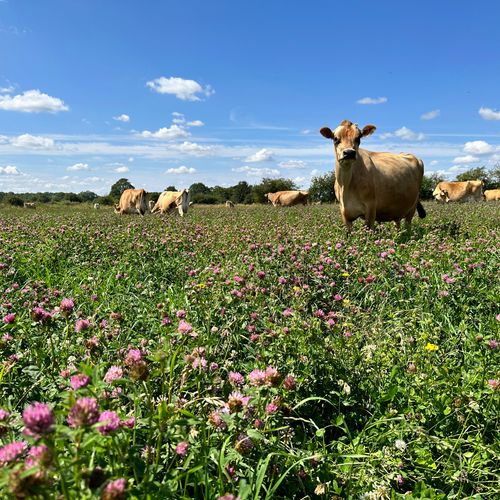
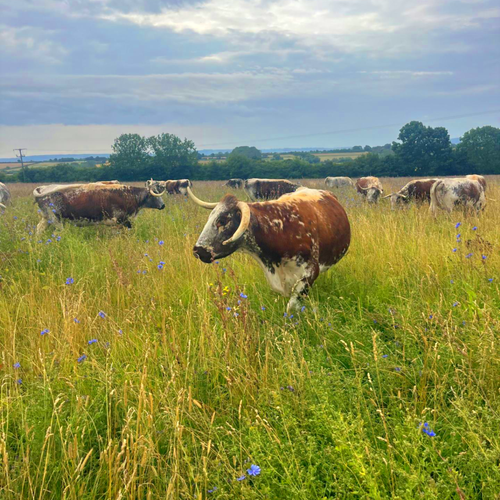
Grazing at Old Hall Farm
Our view is that we need on farm measurements of emissions and a better understanding of the carbon cycle under pasture for life system characteristics - for example; conservation grazing, silvopasture, Adaptive Multi-Paddock Grazing, longer rotations, 100% pasture fed diets, diets incorporating tree browse, multi-species swards and emissions from animals and their offspring that have been in those systems for multiple generations. We also support the use of Holistic Sustainability Assessments that account for a much wider range of sustainability measures. Whilst some studies are starting to investigate these data and approaches, they are lacking in number and require more funding and support.
In short, we agree that fossil fuel reductions are critical to address climate change, and that industrialised livestock systems that decouple animals from land and which are fossil fuel dependent are a significant problem. We believe that more and better data relating to low input systems are needed and that we need to assess systems holistically, reflecting environmental impact is much more than carbon.
All posts
- Research
- Case study
- Land
- Soil
- Pasture & Profit
- Water
- Biodiversity
- Farmers
- Peer-to-peer
Pasture and Profit summary outcomes
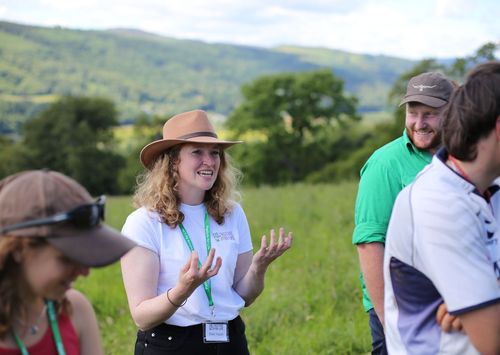
An innovative peer-to-peer knowledge exchange model, facilitated by regional programme teams, led by experienced co-ordinators.
11/05/26

- Membership
- FAQs
 Members only
How to use the Pasture for Life forum
17/03/26
-500x500.jpg)
-500x500.png)